horizontal Math Drills Worksheets
Our horizontal math drills worksheets provide extensive practice with problems arranged left-to-right across the page. These 66 worksheets cover addition, subtraction, multiplication, and division with 50-100 problems each, helping students build math fluency through repetitive horizontal format practice.
×
About these worksheets
Addition drill worksheets cover the full range of basic fact fluency. Problem sets include adding within 5, adding and subtracting within 10 and 20, finding ten more and ten less, adding 9s with mental math shortcuts, adding to multiples of ten, and individual fact families from 0s through 10s. Mixed drill sets and missing addend problems are also included. Each worksheet contains 50 to 100 problems for timed practice.
koa5
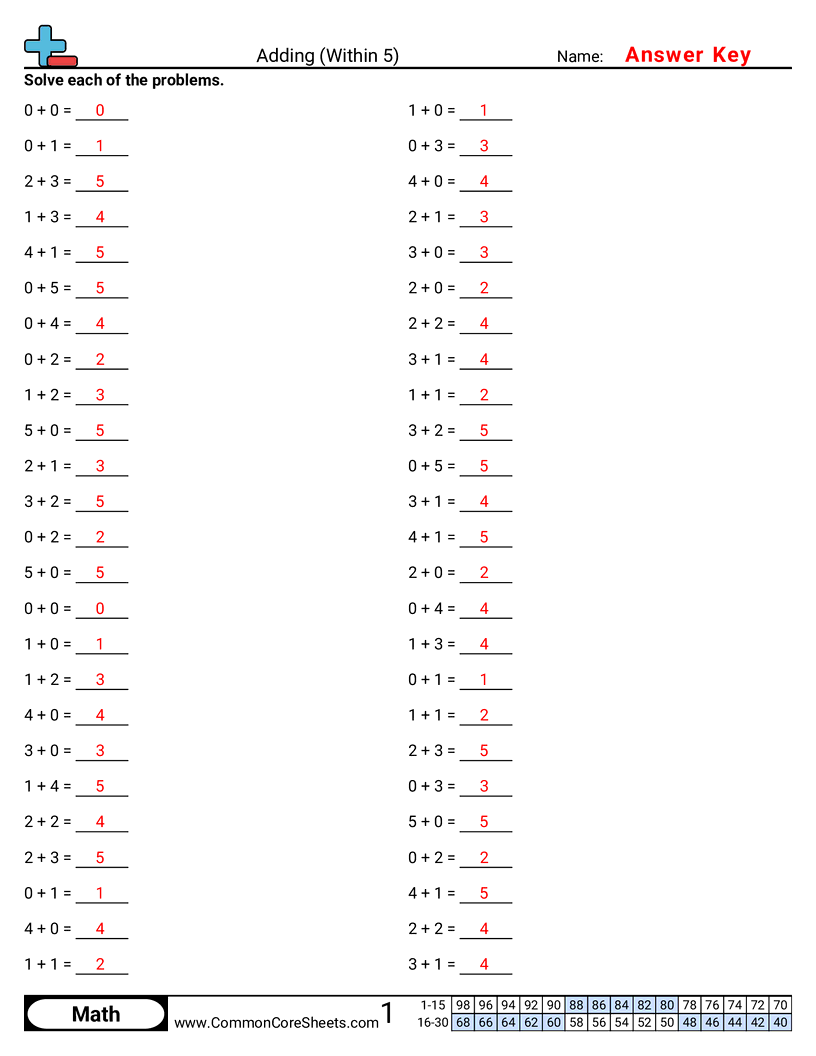
Add two small numbers and find the total up to 5. Recognize and remember common addition facts that make 5 or less.
koa5
Add two small numbers to find a total up to 5. Subtract within 5 to find how many are left. Solve mixed addition and subtraction facts and choose the correct operation. Answer basic facts quickly using mental math.
1nbt5
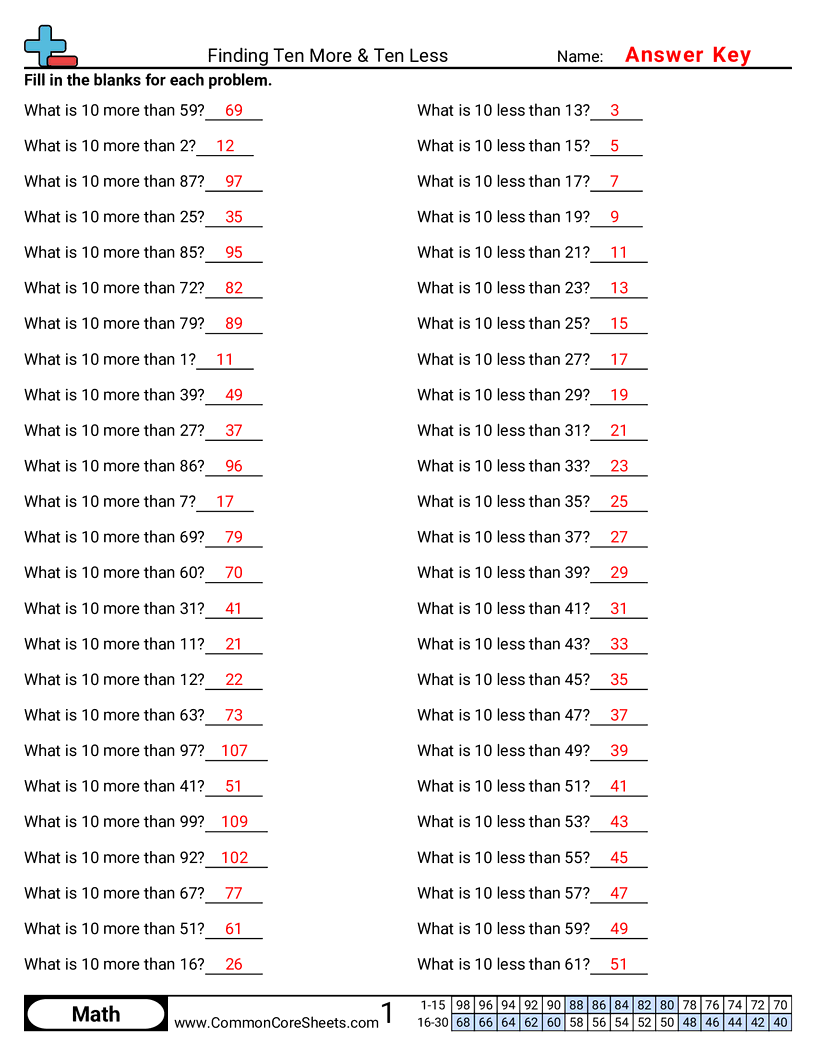
Find ten more or ten less than a two-digit number. Use place value to see how changing the tens digit changes the number.
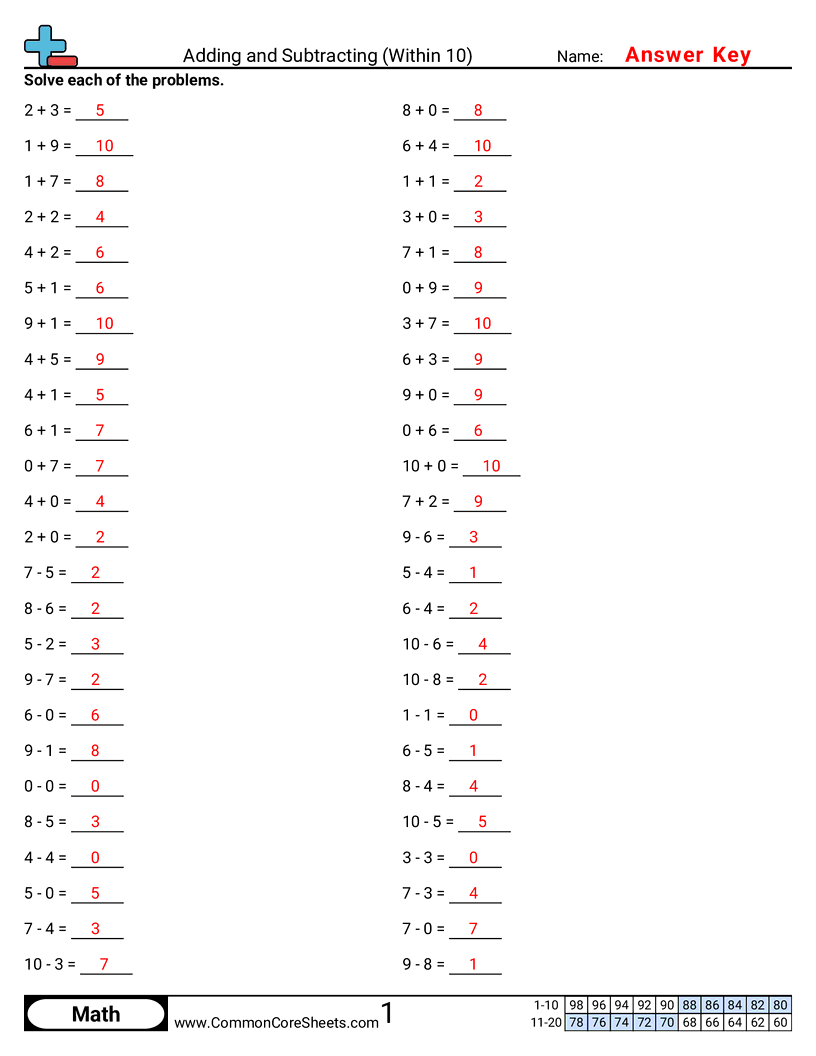
Add two numbers where the total is 10 or less. Subtract one number from another when the answer stays within 10. Switch between addition and subtraction and choose the right operation for each problem. Build speed and accuracy with basic math facts up to 10.
1oa6
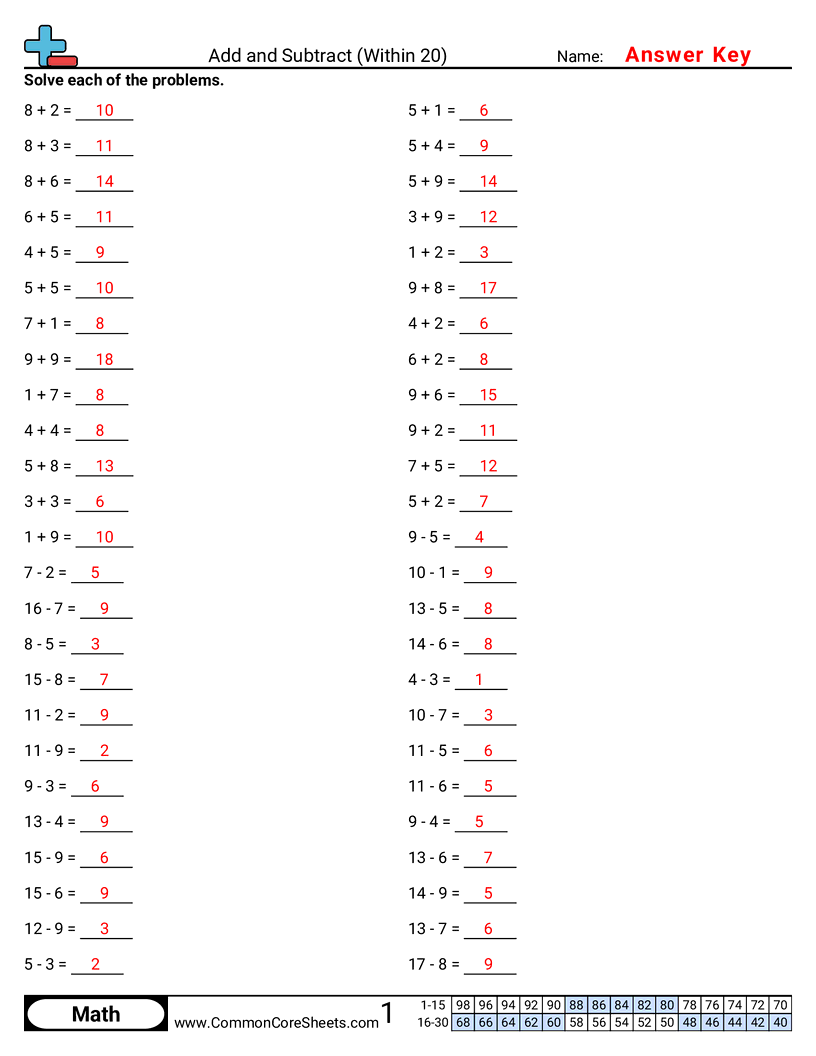
Add two numbers with sums up to 20. Subtract a number from another number and find the difference up to 20. Build speed and accuracy with basic addition and subtraction facts.
2nbt8
Find 10 more or 10 less than a number by changing the tens digit. Find 100 more or 100 less than a number by changing the hundreds digit. Use place value to keep the ones digit the same when adding or subtracting tens and hundreds. Do quick mental math with three-digit numbers without writing out long addition or subtraction.
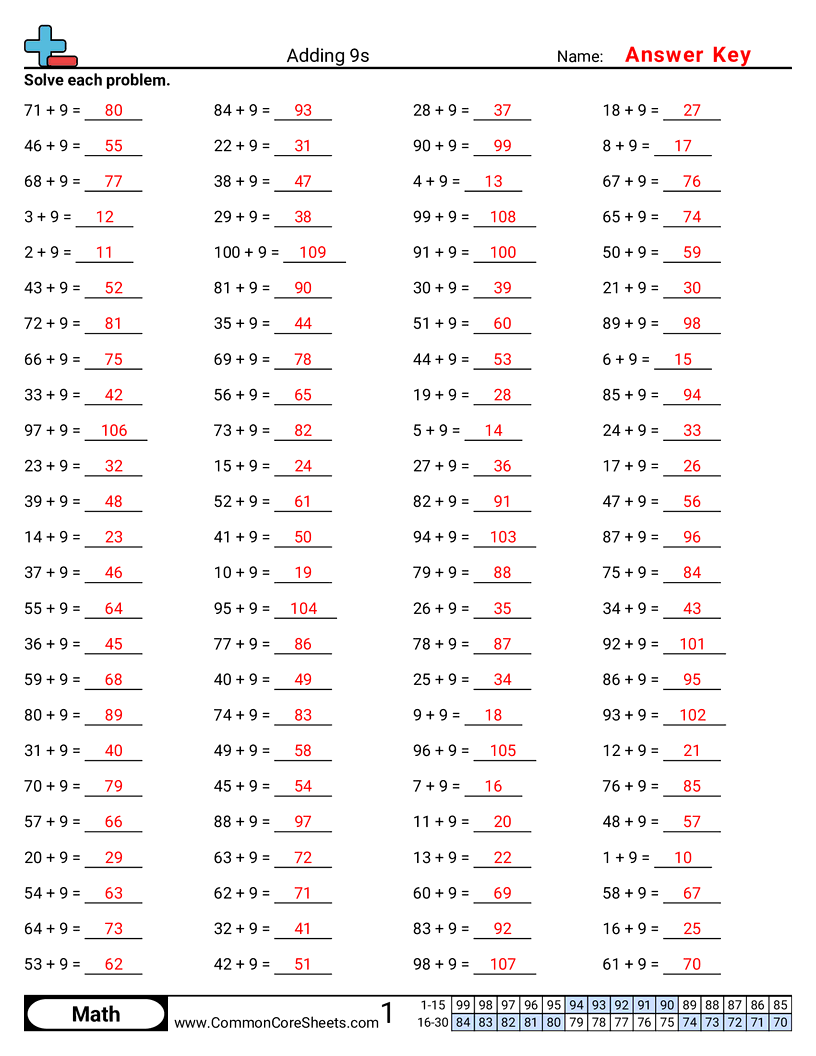
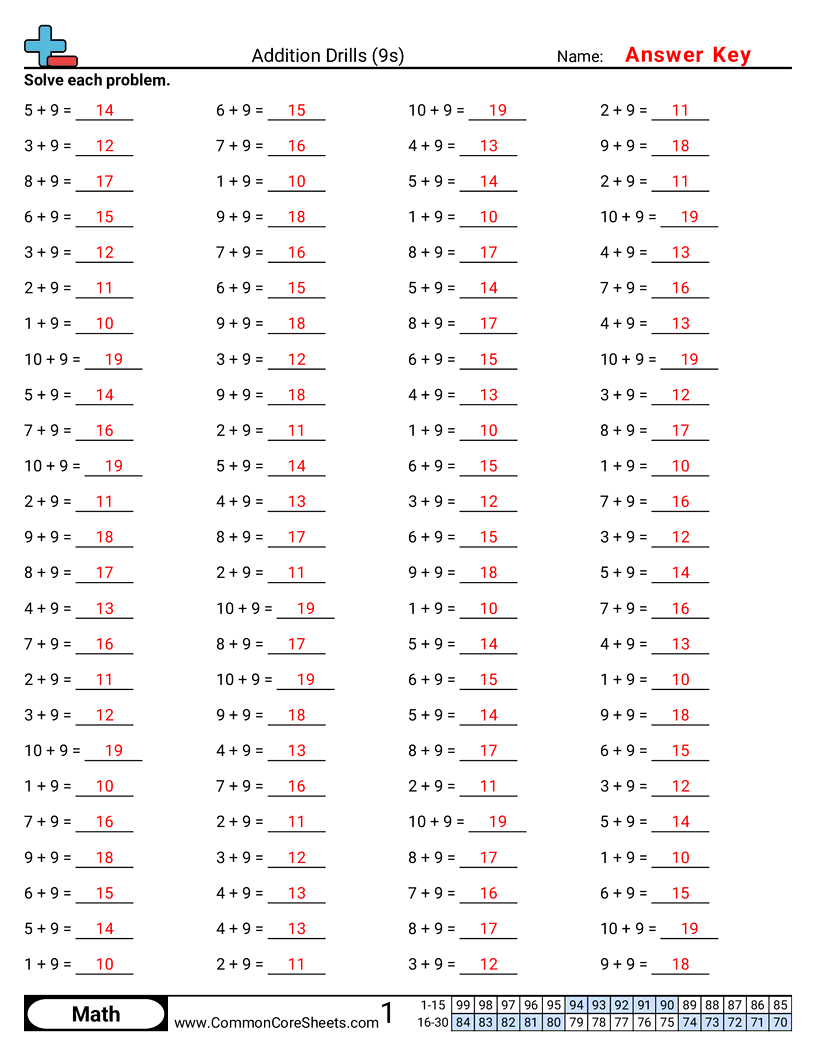
Practice quickly adding 9 to a number. Use a mental math trick for +9, like add 10 then subtract 1. Build speed and accuracy with basic addition facts involving 9. Recognize patterns when numbers increase by 9.
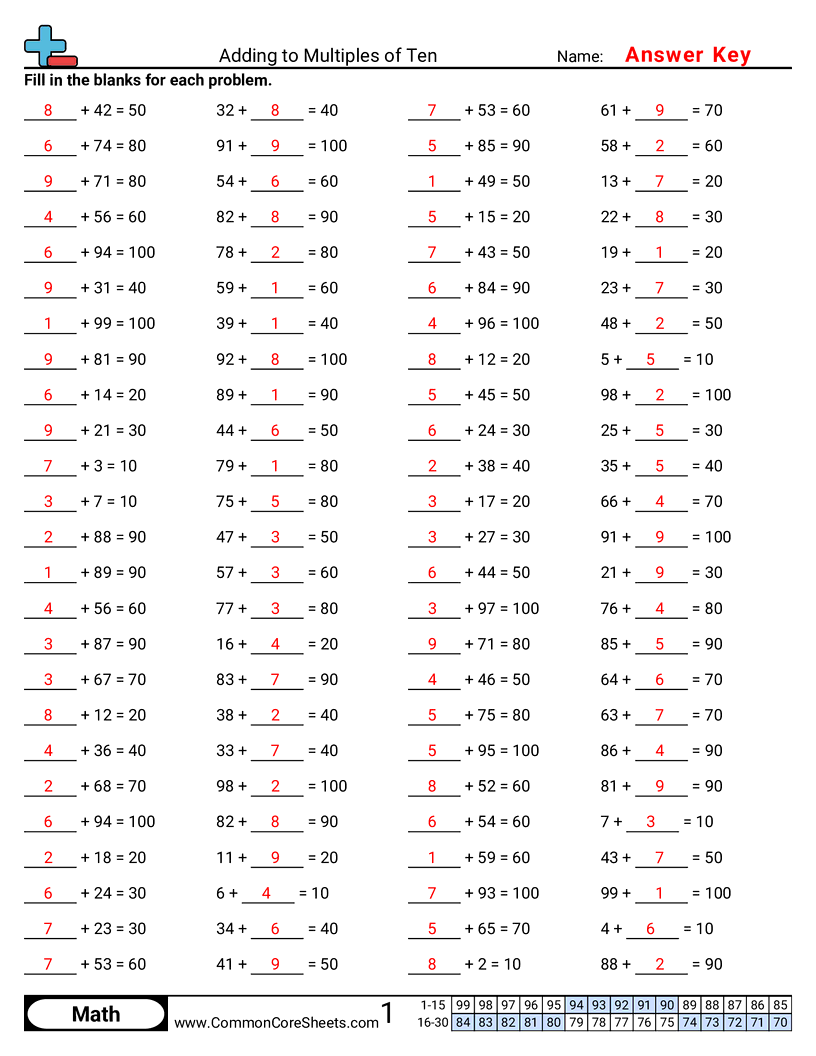
Find the number you need to add to reach the next multiple of 10. Use the ones digit to quickly figure out how far a number is from the nearest ten. Build speed and accuracy with mental addition facts that make a ten.
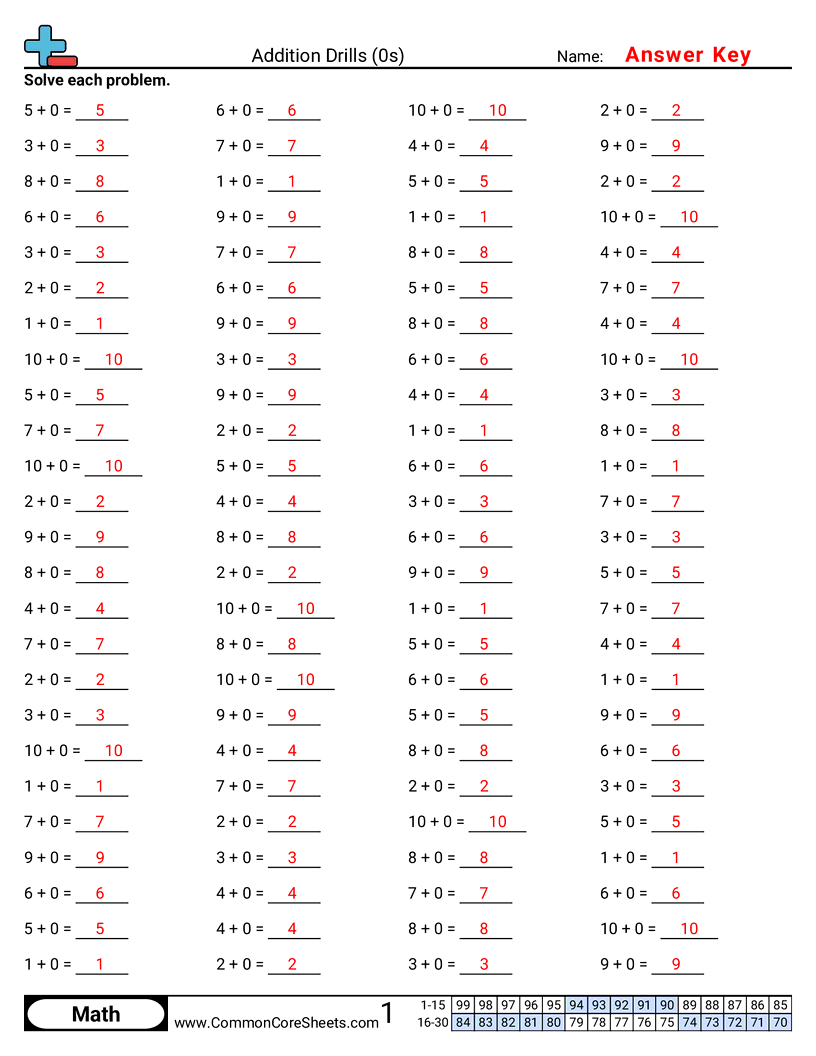
Practice adding 0 to a number and seeing that the number stays the same. Build speed and confidence with basic addition facts that include 0.
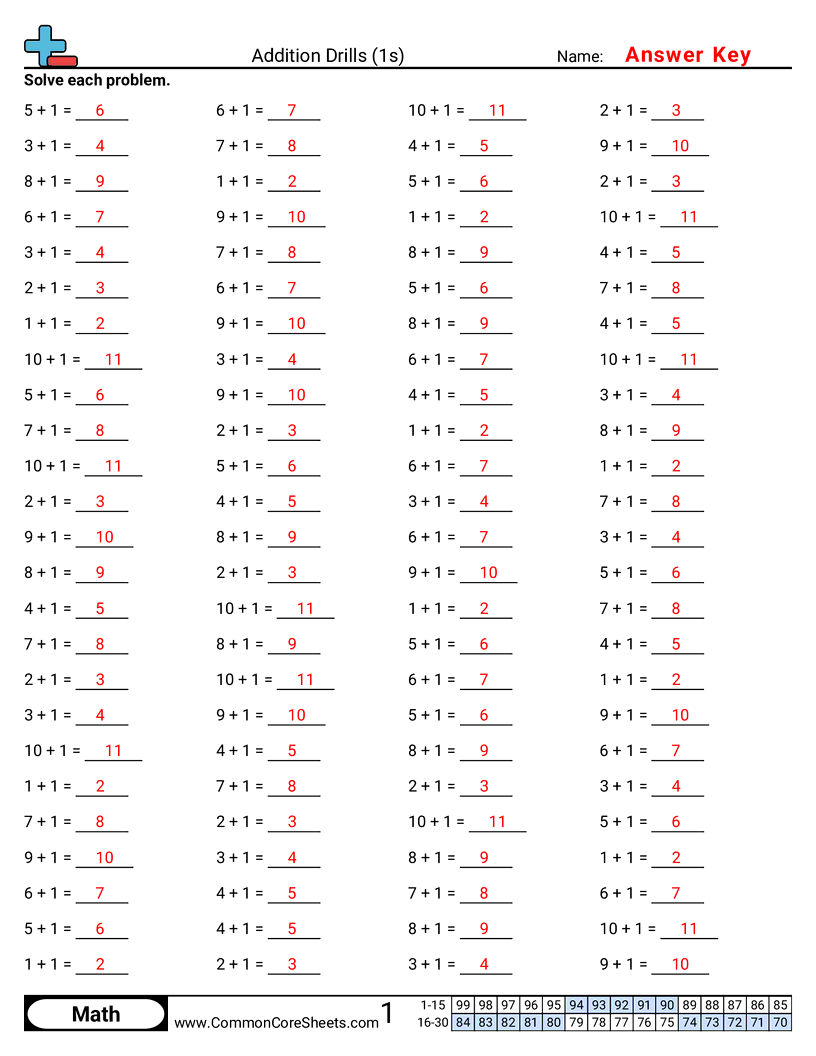
Practice adding 1 to a number from 1 to 10. Get faster at basic addition facts that include +1. Notice the pattern that adding 1 makes the number go up by one. Build confidence doing simple mental math without counting on fingers.
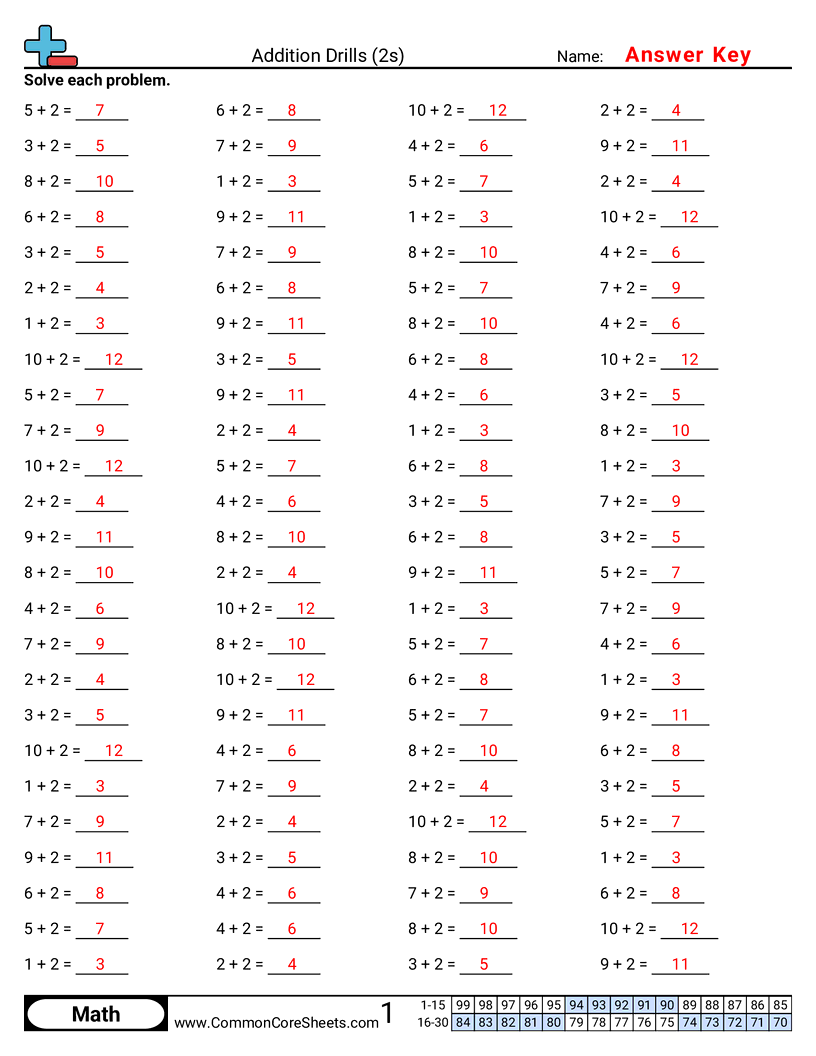
Add 2 to numbers from 1 to 10 quickly and accurately. Build confidence with basic addition facts so answers come to mind without counting.
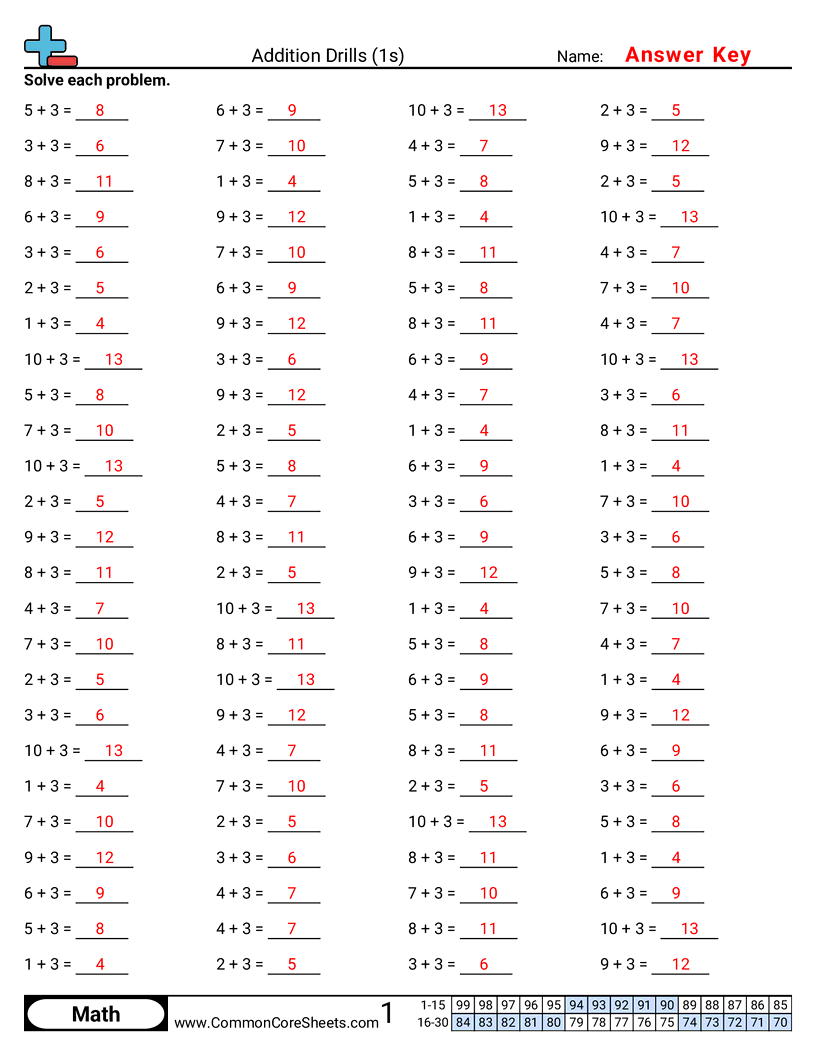
Add 3 to another number quickly and correctly. Recognize and remember the addition facts for 3 (like 3+7 and 3+9).
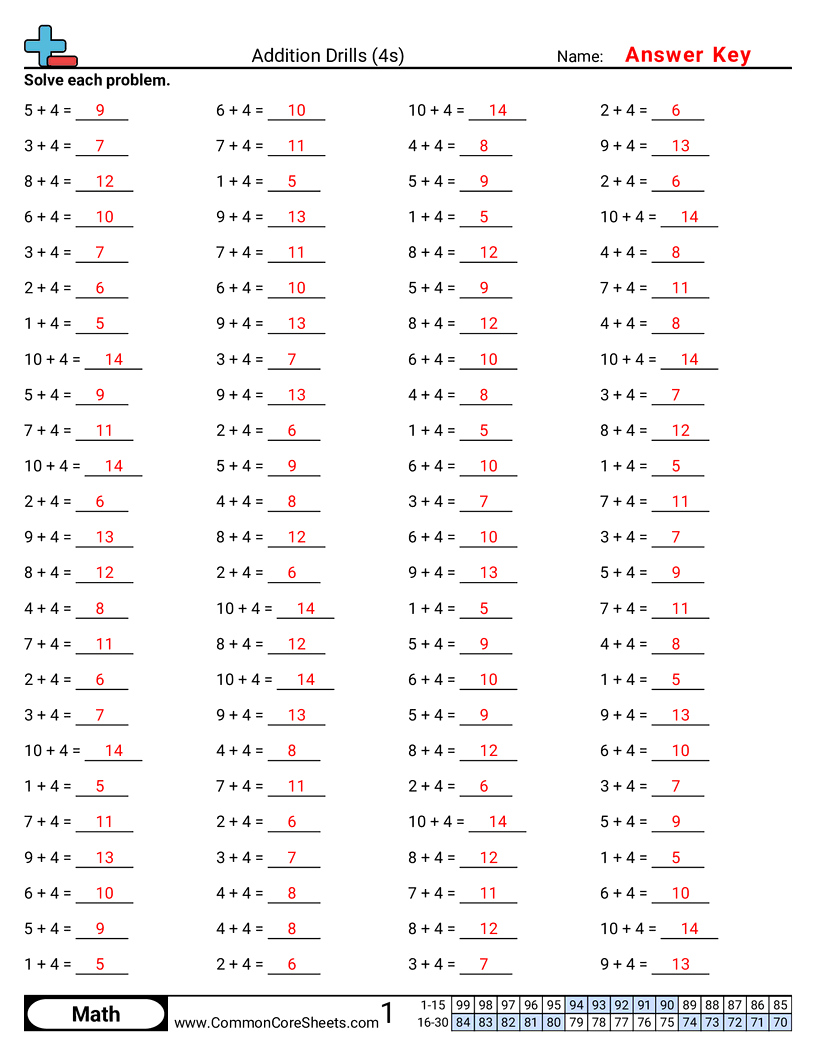
Add 4 to numbers from 1 to 10 quickly and correctly. Build speed and confidence with mental math for simple addition.
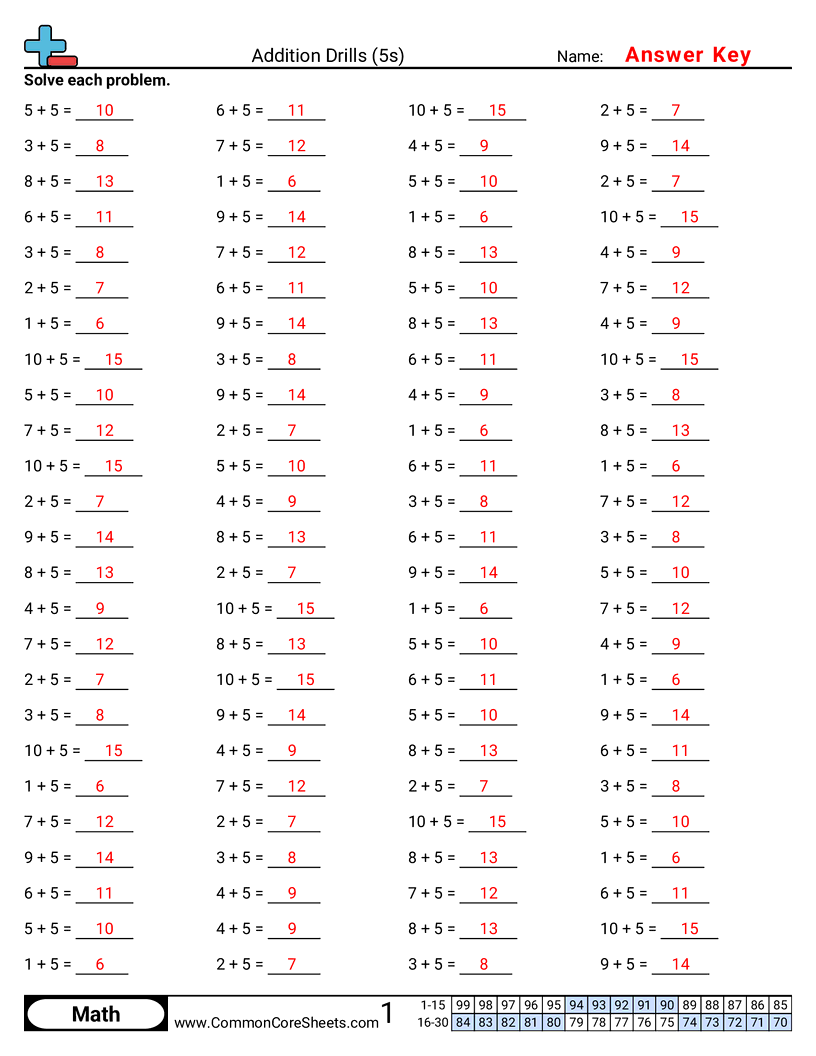
Memorize and recall the “5 plus” addition facts without counting. Build speed and accuracy with simple addition in your head.
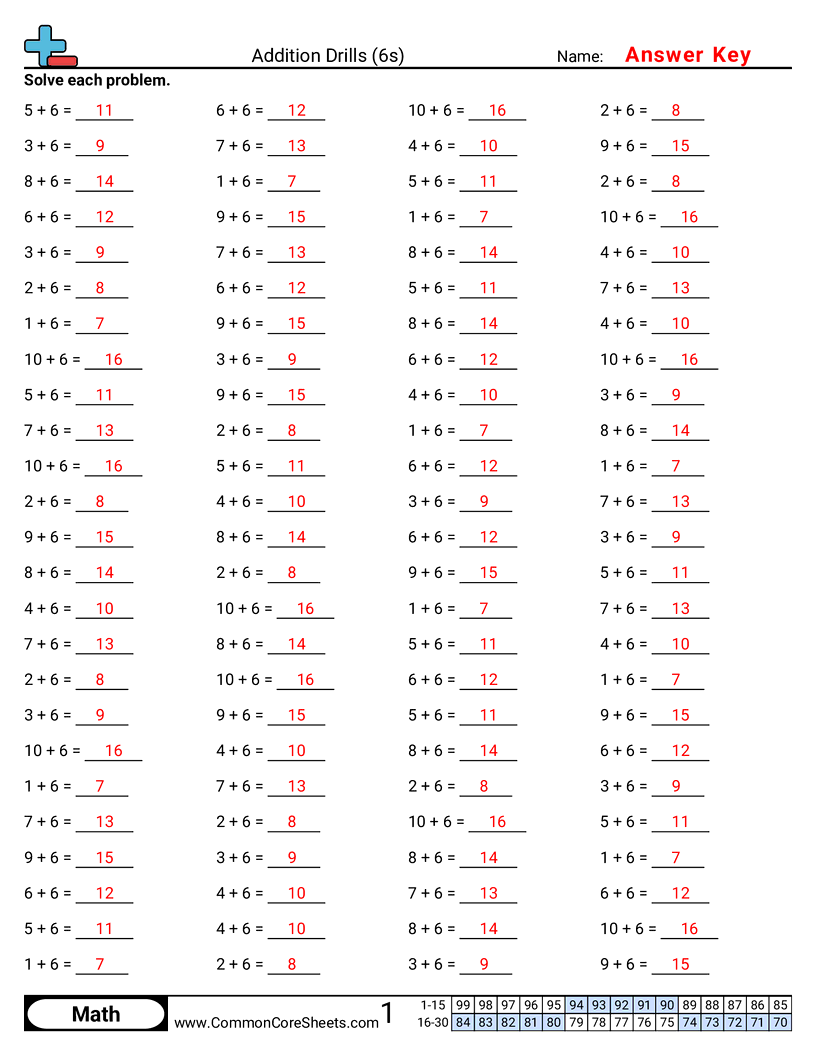
Add 6 to a number from 1 to 10 quickly and correctly. Memorize and recall the addition facts for the 6s. Build speed and confidence with mental math when adding a small number to 6.
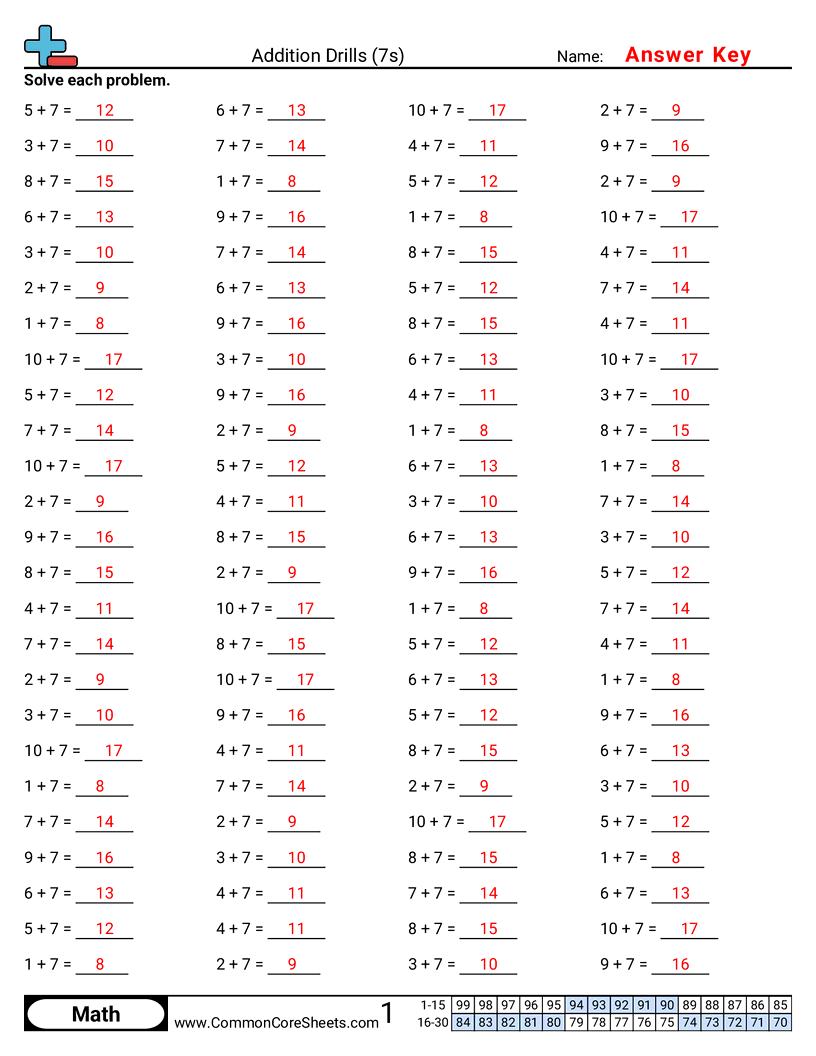
Add 7 to a number from 1 to 10 quickly and accurately. Memorize the addition facts for 7 (like 7+6 and 7+9). Use mental math to find sums without counting one by one.
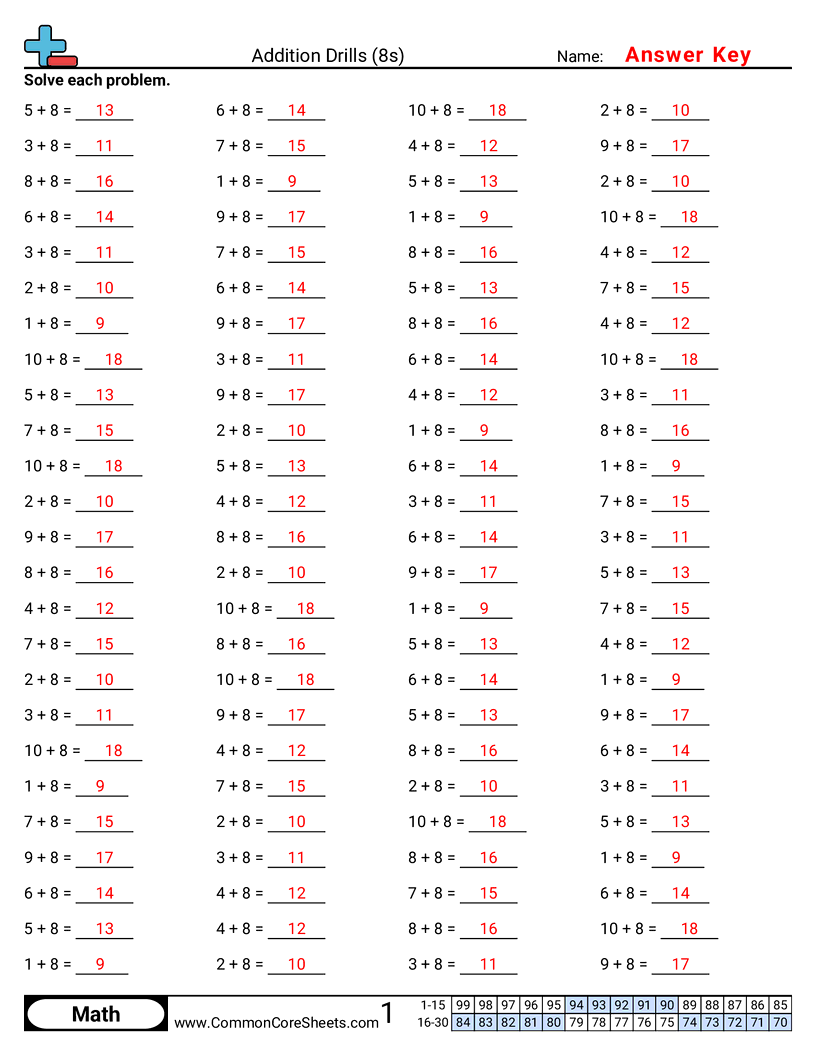
Add 8 to a number quickly and accurately. Recall the addition facts for 8 + 1 through 8 + 10 from memory. Use mental math to find sums when one addend is 8.
Practice adding 9 to a number from 1 to 10. Use mental math to add 9 by thinking “add 10, then take 1 away.” Build confidence with quick, accurate addition without counting on fingers.
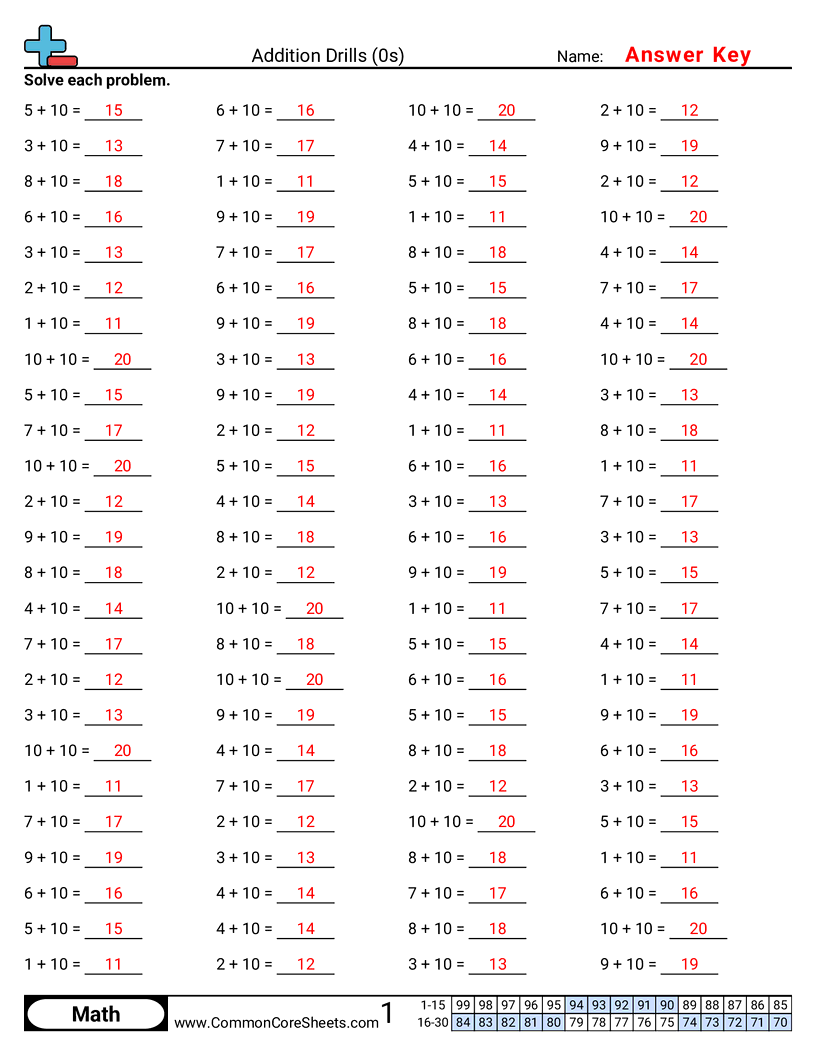
Add 10 to a number from 1 to 10 to find the total. Use the pattern that adding 10 makes the number 10 more to solve problems quickly.
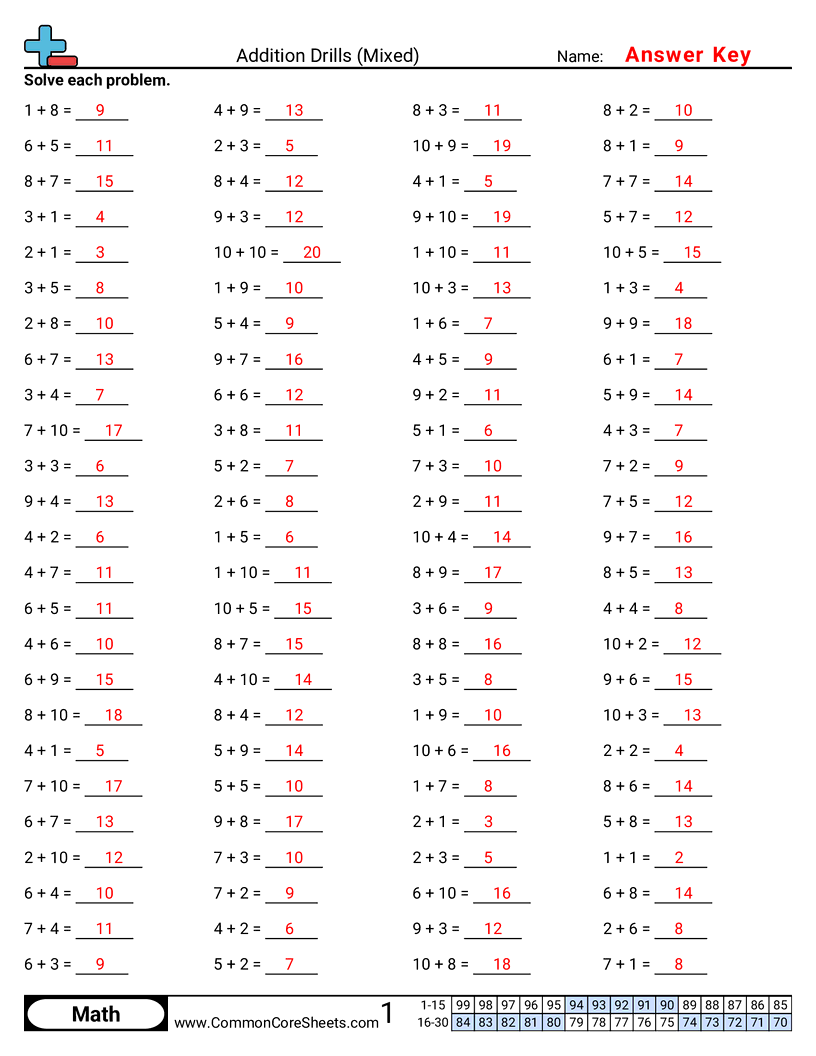
Add two numbers from 1 to 10 quickly and accurately. Recall basic addition facts without counting on fingers.
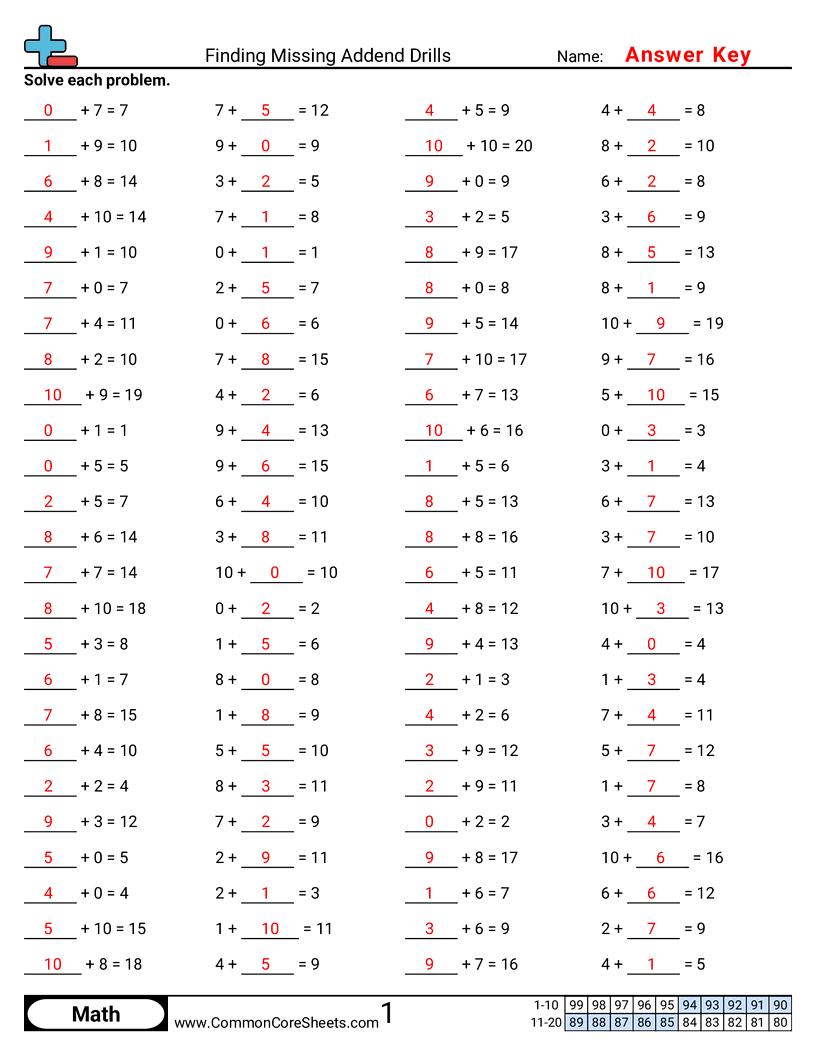
Find the missing number that makes an addition sentence true. Use what you know about addition facts to solve for an unknown addend quickly. Read and solve equations with a blank or box in different positions. Build speed and accuracy with mental math when one part of the sum is missing.
About these worksheets
Subtraction drill worksheets build speed and accuracy with basic subtraction facts. Problem sets include subtracting within 5, subtracting single digits from teen numbers, finding missing minuends, and individual fact families from 0s through 10s in both vertical and horizontal formats. Mixed drill sets round out the practice. Each worksheet contains 50 to 100 problems for timed assessments or daily warm-ups.
koa5
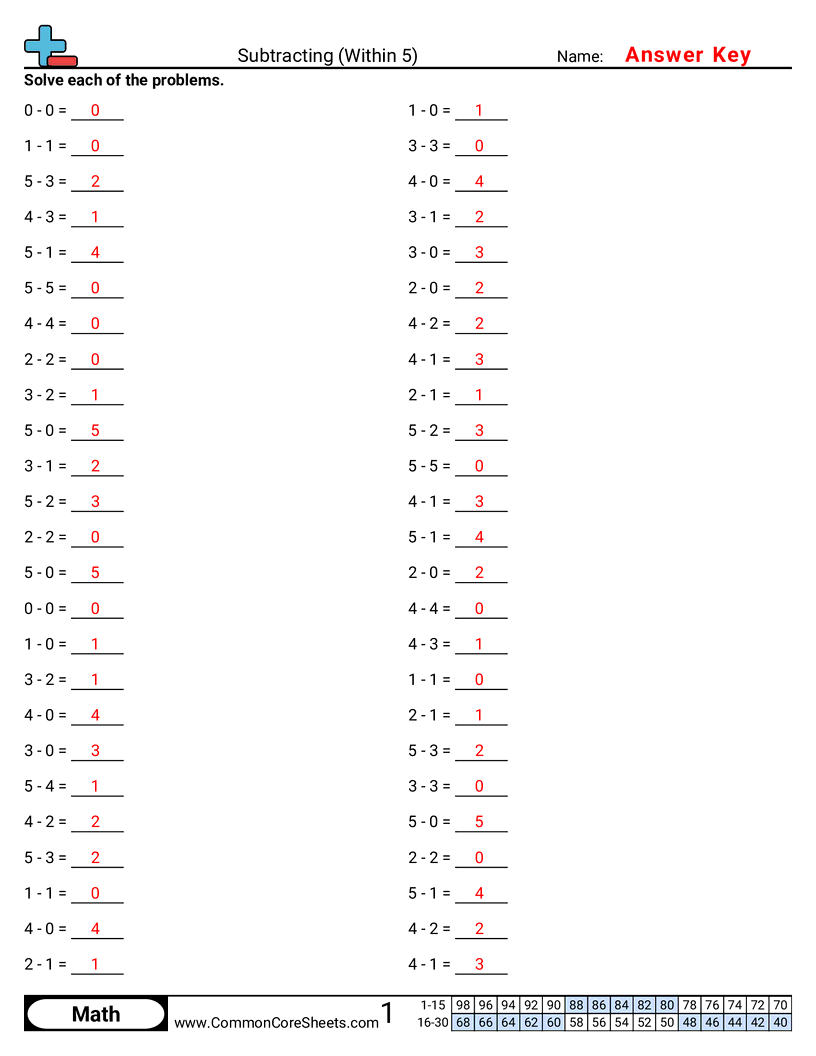
Subtract numbers up to 5 to find how many are left. Use subtraction facts within 5 quickly from memory. Solve simple subtraction equations written with numbers and a minus sign.
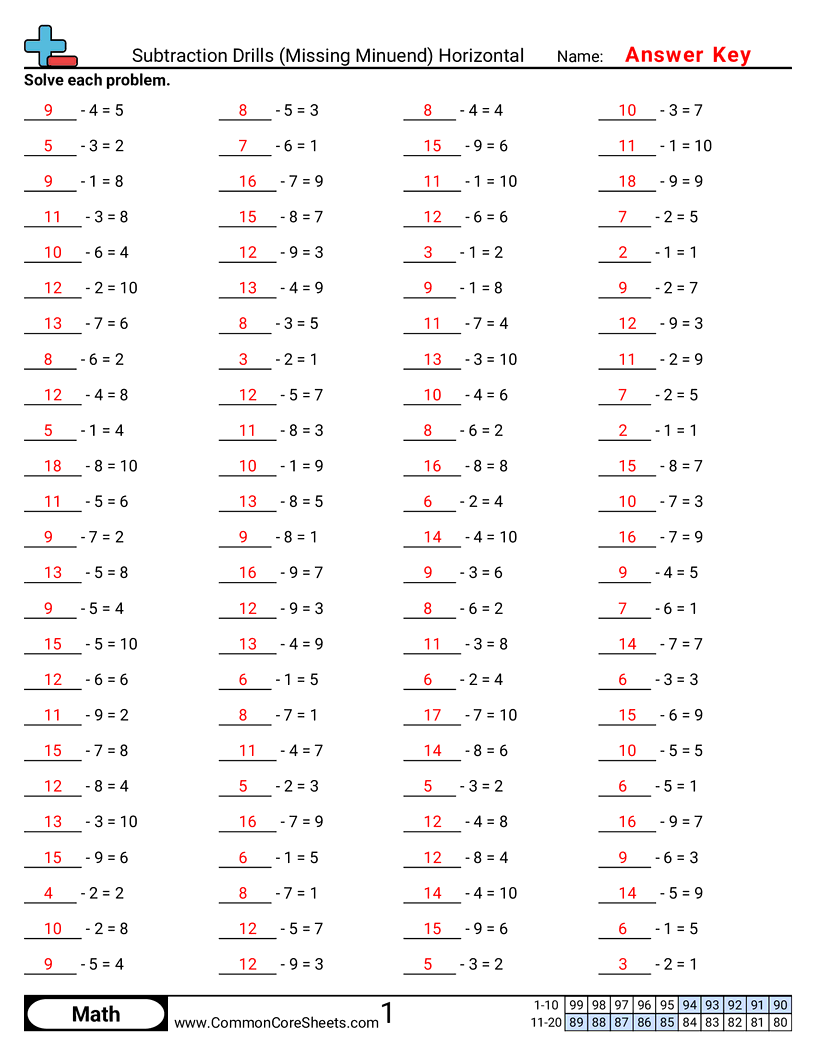
Figure out the starting number when you know what was taken away and what’s left. Write and solve subtraction equations with a blank in the first spot (___ − number = number). Use the relationship between subtraction and addition to find the missing number. Build speed and accuracy with basic subtraction facts and mental math.
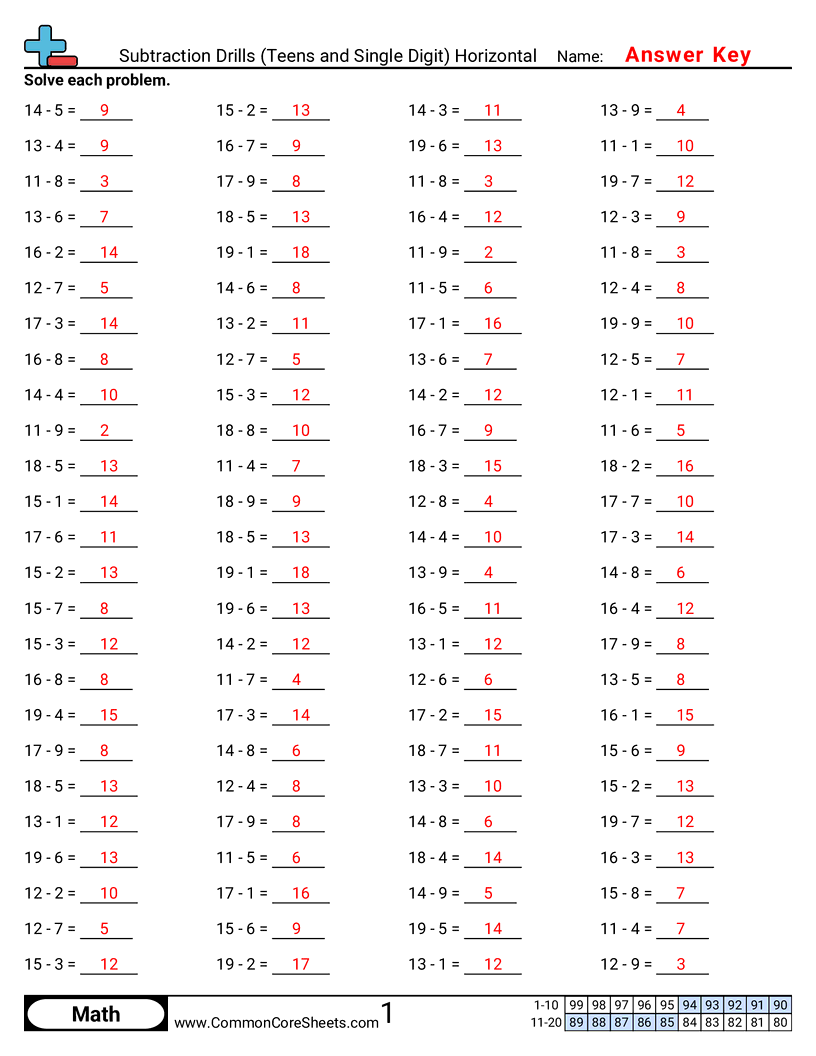
Subtract a one-digit number from a teen number to find the difference. Use mental math to take away small amounts quickly and accurately. Build speed and confidence with basic subtraction facts involving teen numbers.
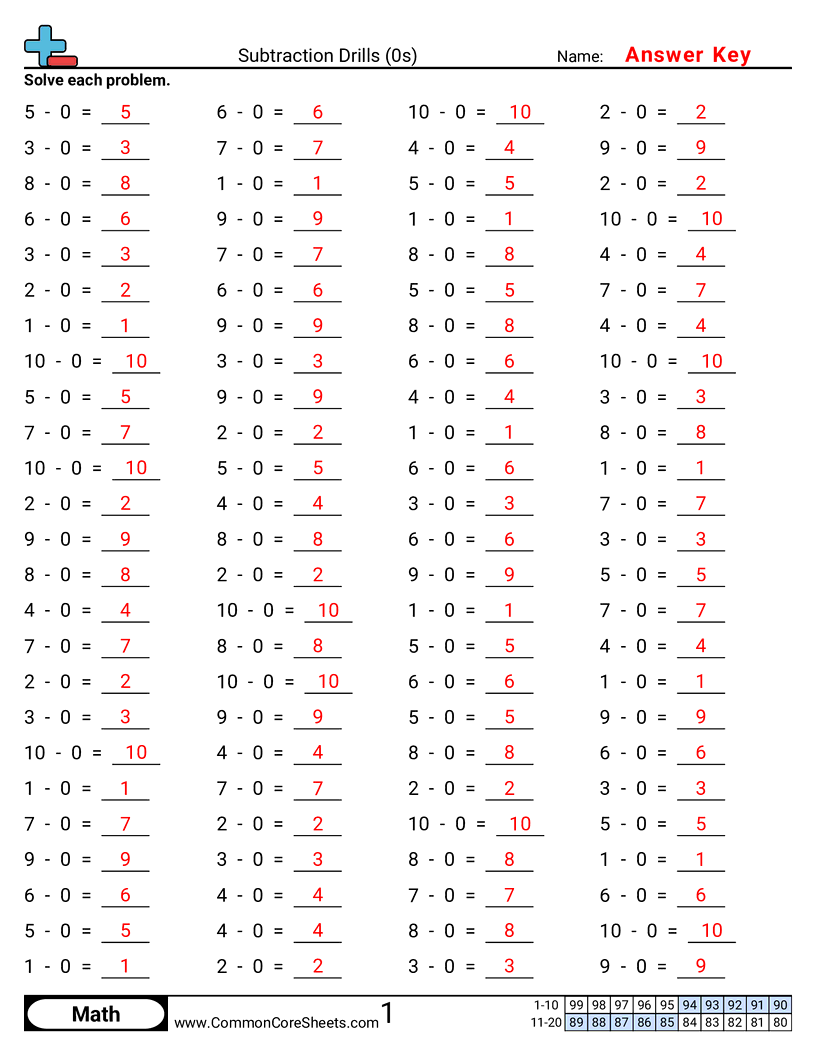
Practice subtracting 0 from a number and seeing that the number stays the same. Get faster at basic subtraction facts using mental math. Read and solve subtraction expressions written in a horizontal line (like 8 - 0). Build confidence with the meaning of the minus sign and the idea of “take away zero.”
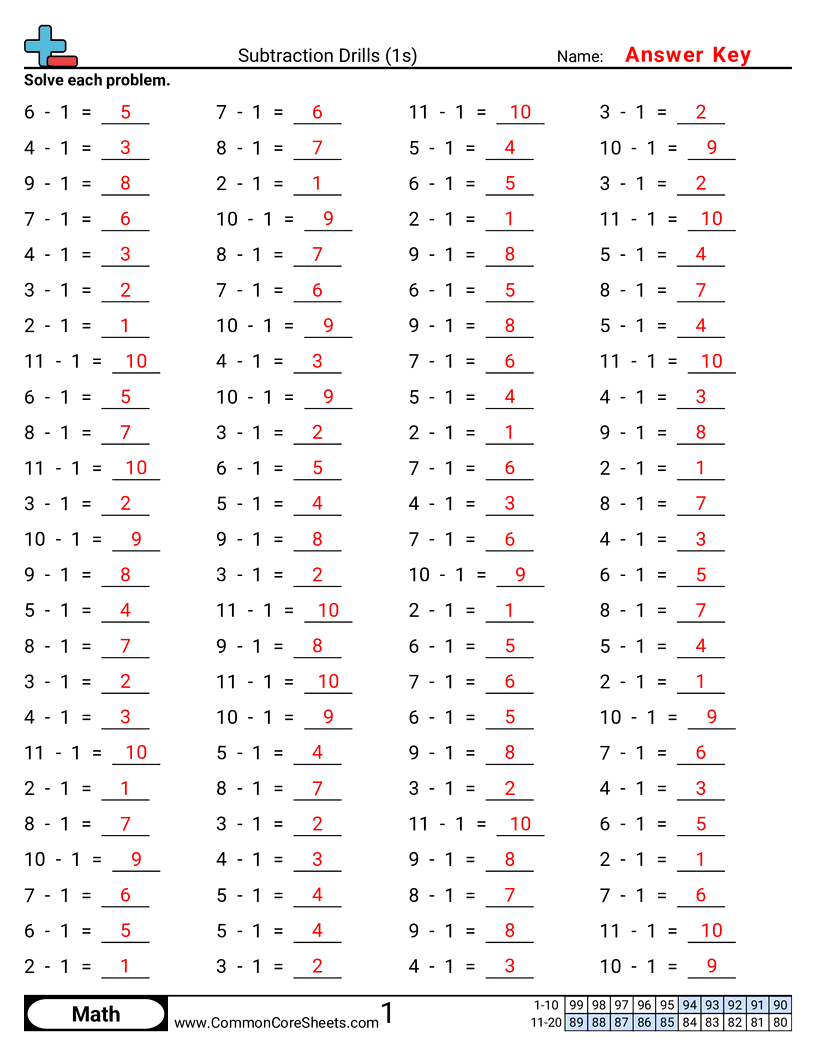
Practice subtracting 1 from a number quickly and accurately. Notice that subtracting 1 makes a number one less and changes only the last digit most of the time. Build speed with basic subtraction facts for mental math.
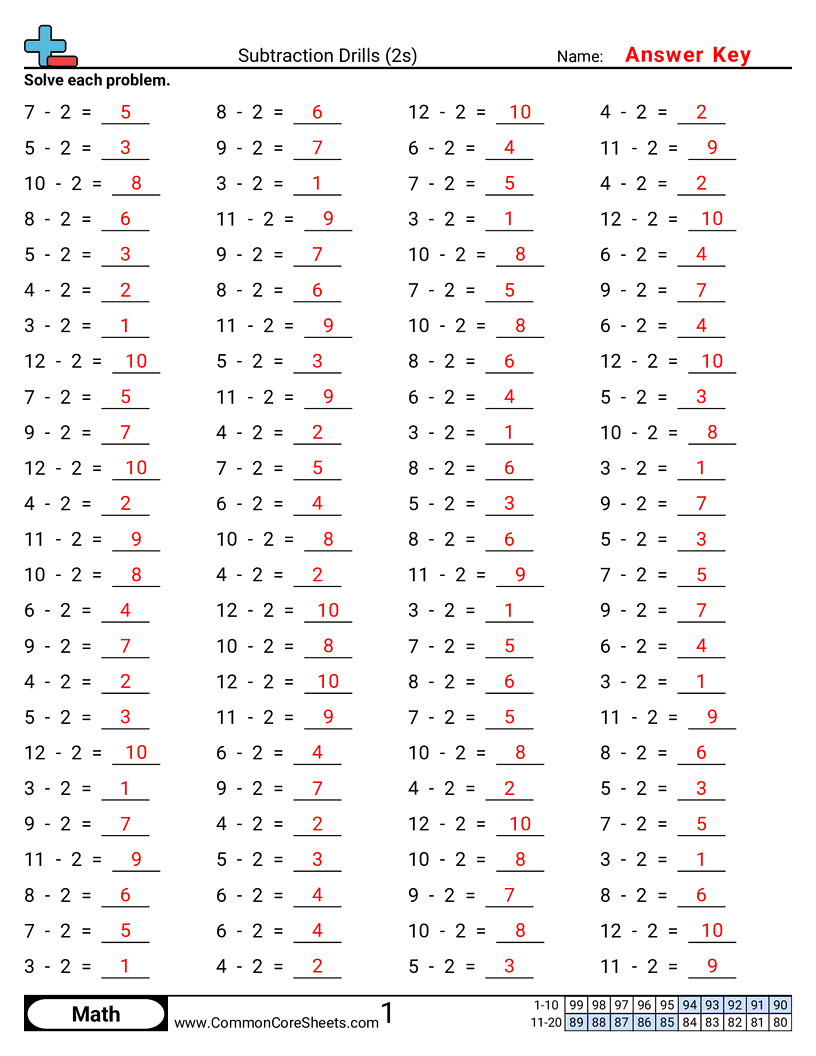
Practice subtracting 2 from a number quickly and accurately. Get comfortable counting back by 2s to find the difference. Build subtraction fact fluency so answers come more automatically.
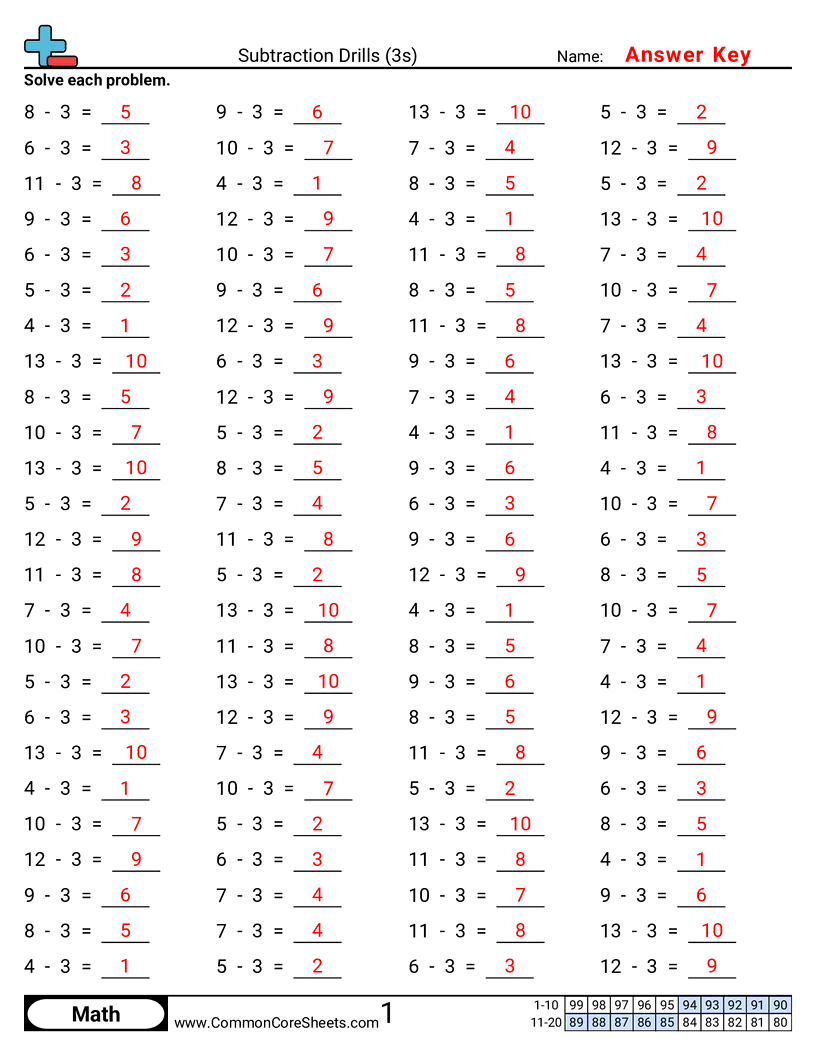
Practice subtracting 3 from a number quickly and accurately. Get comfortable counting back by 3s to find the difference. Build speed with basic subtraction facts that use 3.
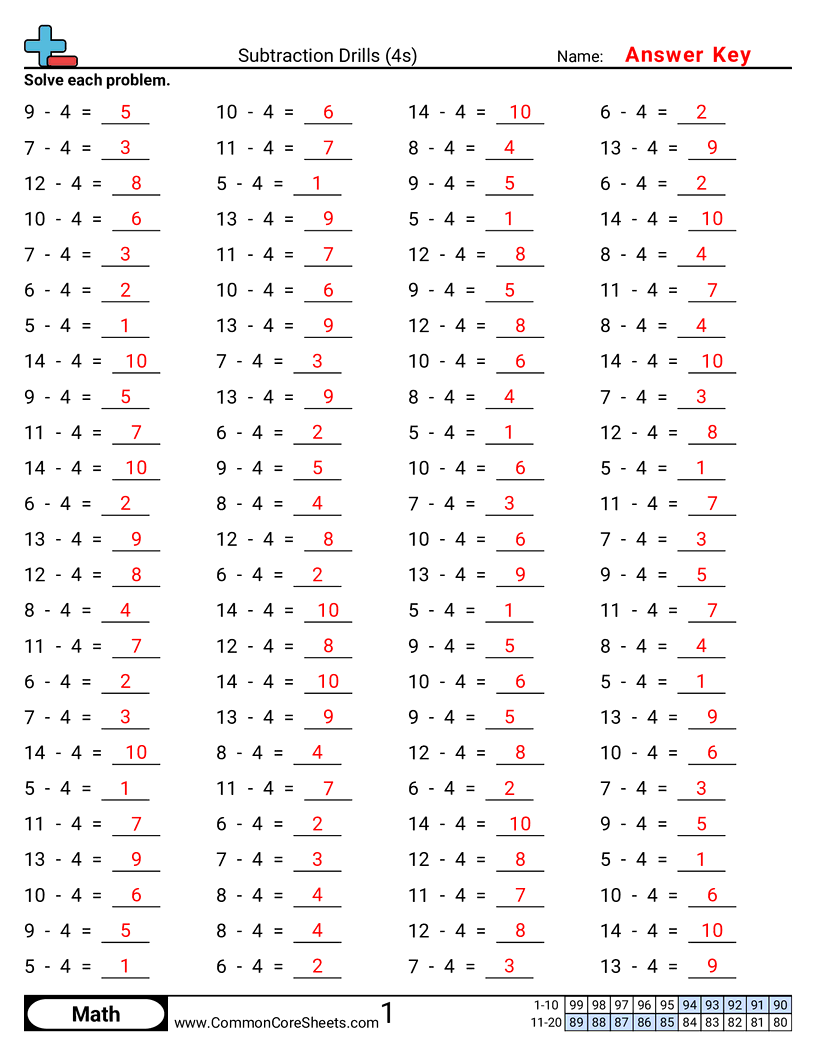
Practice subtracting 4 from a number quickly and accurately. Get comfortable using subtraction facts with 4 to find the difference. Build mental math speed by counting back 4 in one step.
Practice subtracting 5 from different numbers quickly and accurately. Get comfortable counting back by fives to find a difference. Build speed with basic subtraction facts that use 5. Strengthen mental math by doing subtraction without using objects or a number line.
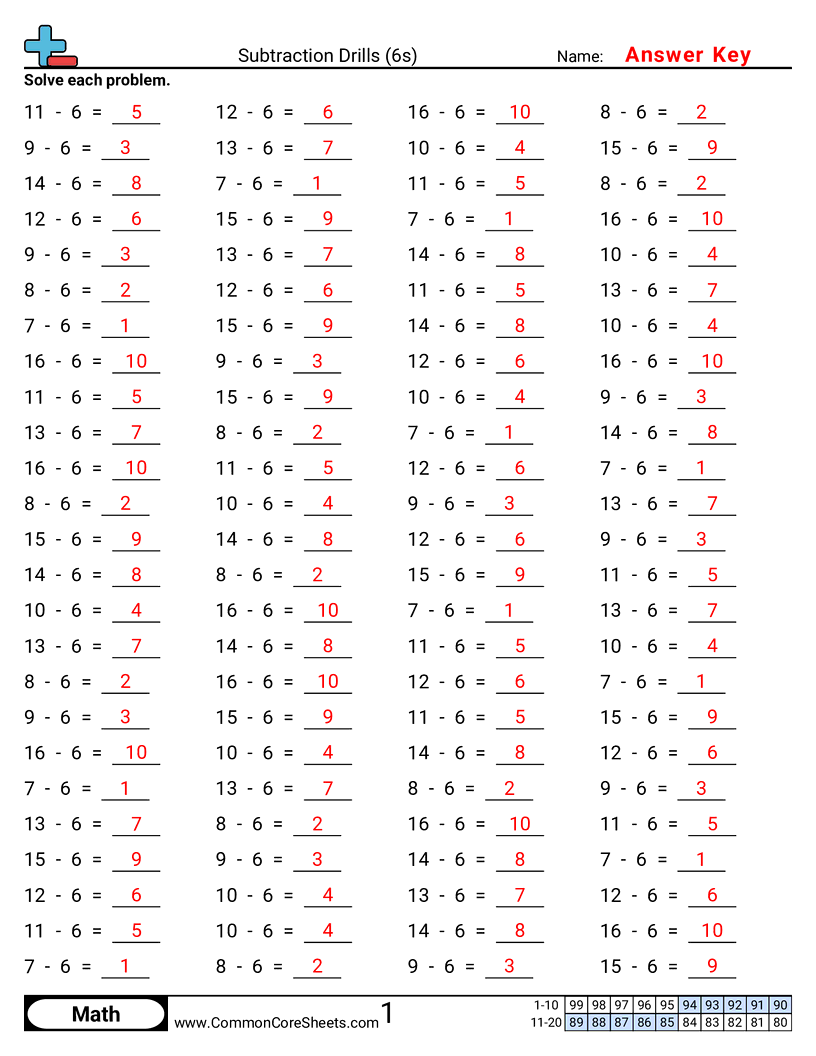
Subtract 6 from a number quickly and accurately. Use subtraction facts with 6 to find differences without counting every time. Build speed and confidence with mental subtraction. Notice patterns when taking away 6 (like the answer going down by 6 each time).
Practice subtracting 7 from a number quickly and accurately. Get comfortable using subtraction facts to find the difference without counting one by one. Build speed and confidence with mental subtraction. Notice patterns when you keep taking away 7 from different numbers.
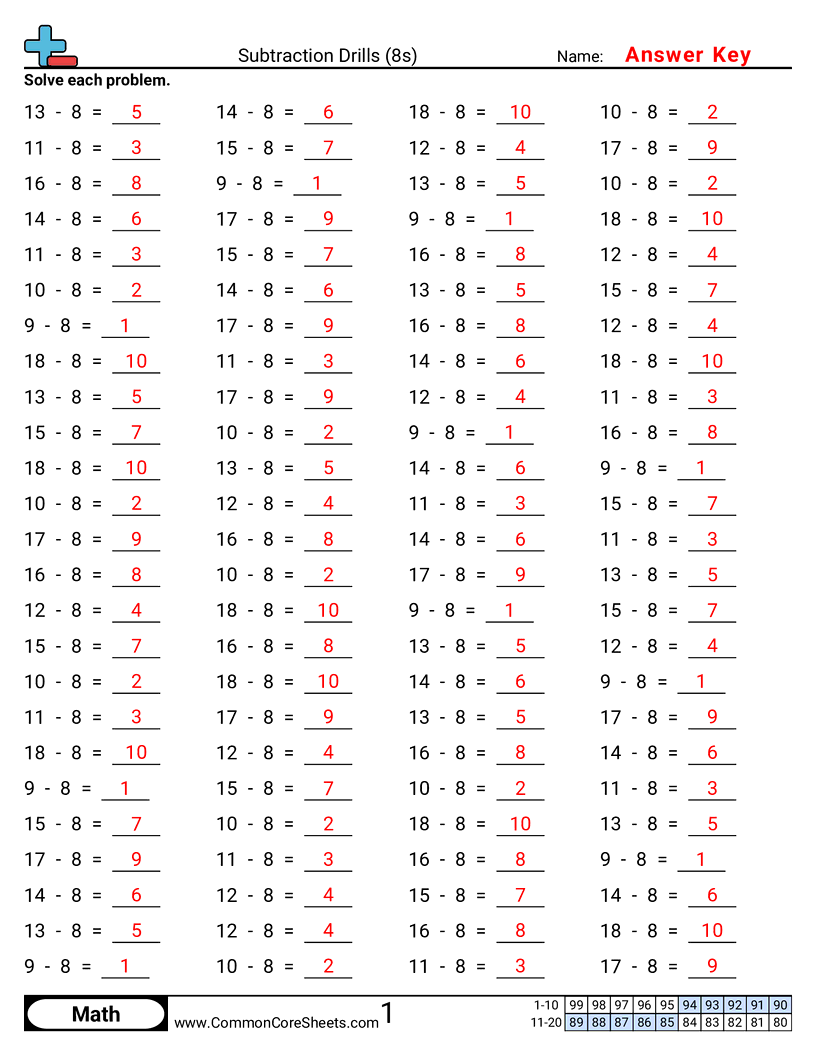
Subtract 8 from a number quickly and accurately. Use the idea of “take away 8” to find the difference between two numbers. Build speed and confidence with subtraction facts involving 8. Do subtraction in your head by counting back 8 or using a known fact.
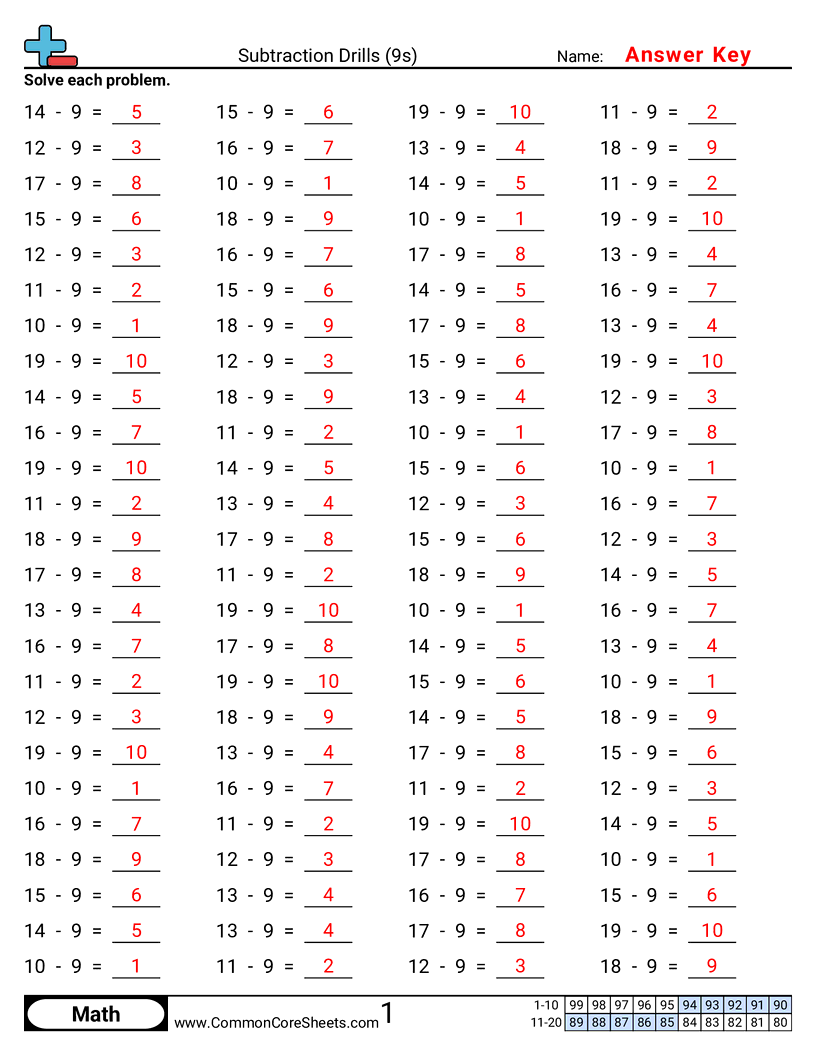
Practice subtracting 9 from a number quickly and accurately. Get comfortable using mental math tricks for minus 9 (like subtract 10, then add 1). Build speed and confidence with subtraction facts to improve overall math fluency. Pay attention to accuracy when subtracting across different starting numbers.
Practice subtracting 10 from a number quickly and accurately. Use place-value patterns to see how the tens digit changes when you take away 10. Build mental math speed by counting back by tens.
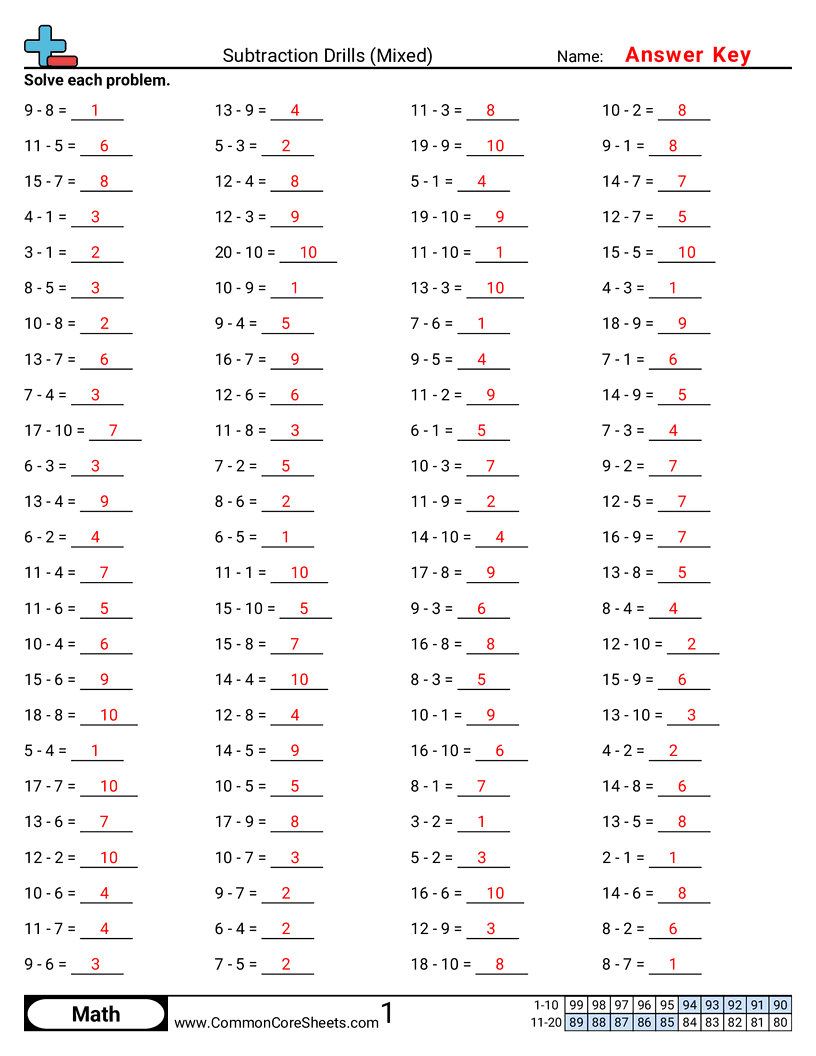
Practice subtracting one number from another to find the difference. Get faster and more accurate with basic subtraction facts. Solve subtraction problems with mixed numbers without relying on a pattern.
Multiplication Drills
Link
About these worksheets
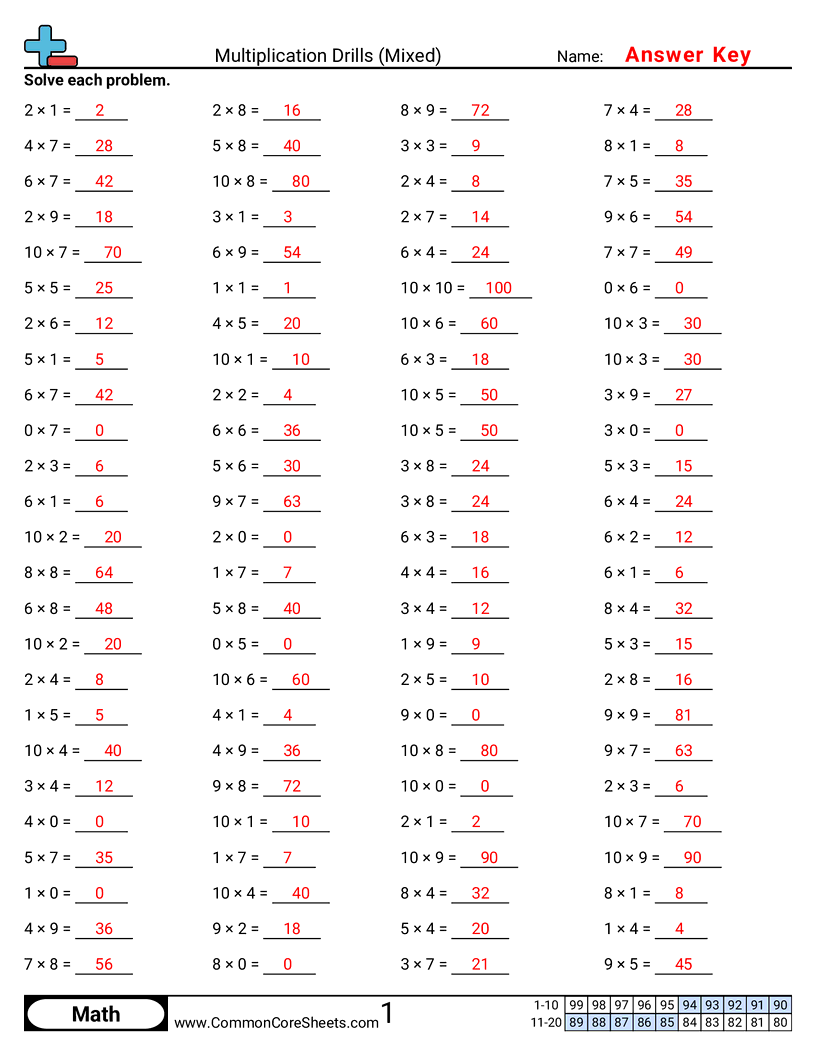
Multiplication drill worksheets help students memorize and recall times table facts quickly. Problem sets cover individual fact families from 2s through 12s, plus mixed sets combining all facts from 1×1 to 10×10. Both vertical and horizontal formats are available. Each worksheet contains 100 problems, making them ideal for timed practice and fact fluency building.
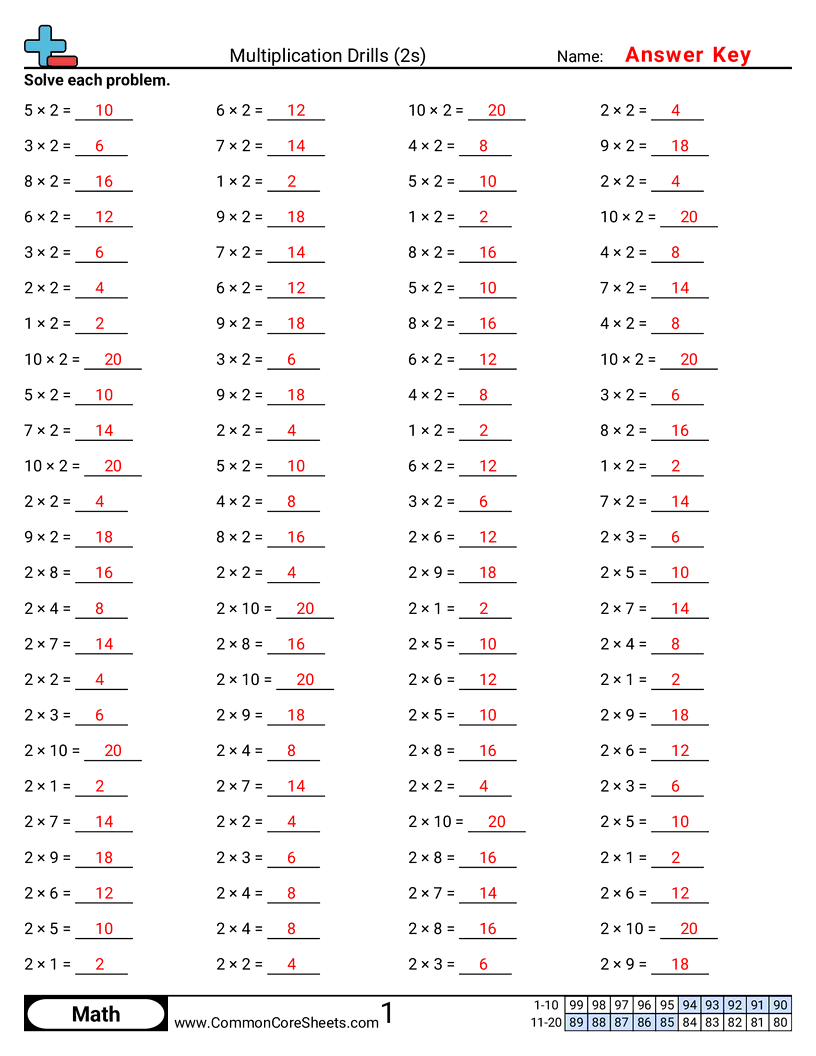
Practice multiplying by 2 to find totals quickly. Memorize the 2 times table facts from 2×1 through 2×10. Get faster and more accurate with basic multiplication facts. Recognize that multiplying by 2 is the same as doubling a number.
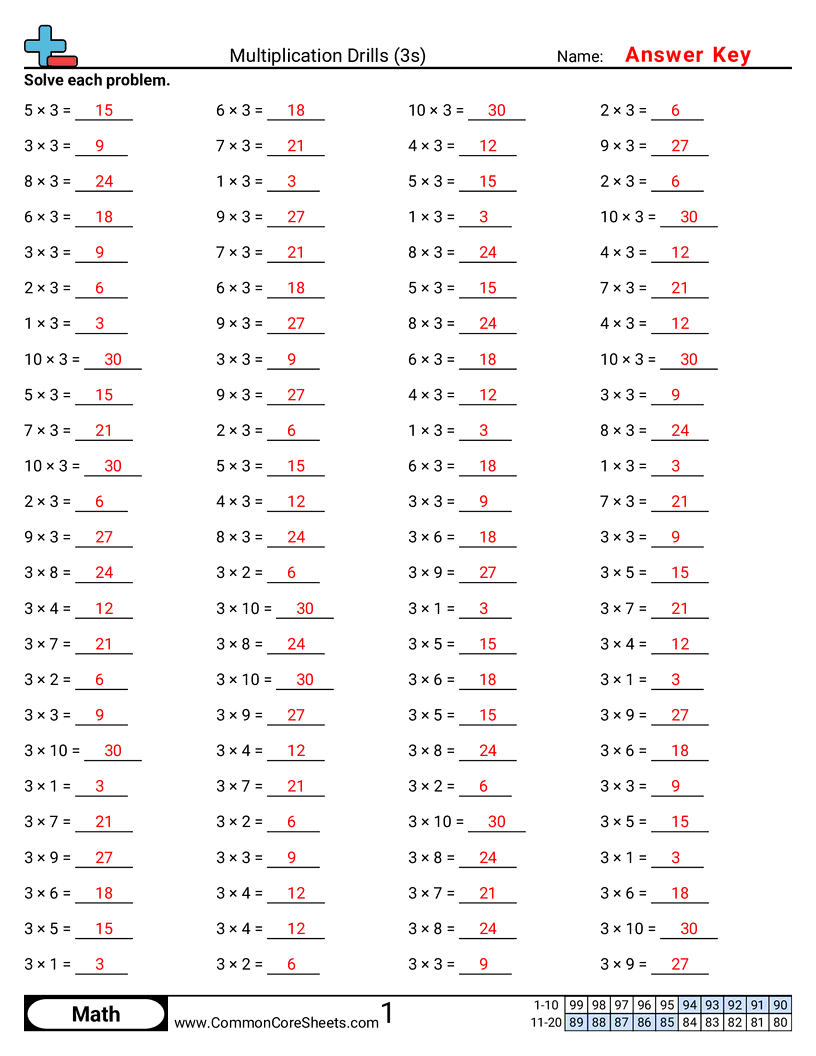
Memorize and recall the 3 times table facts from 3×1 to 3×10. Multiply 3 by a whole number quickly and accurately. Use skip-counting by 3s to find products.
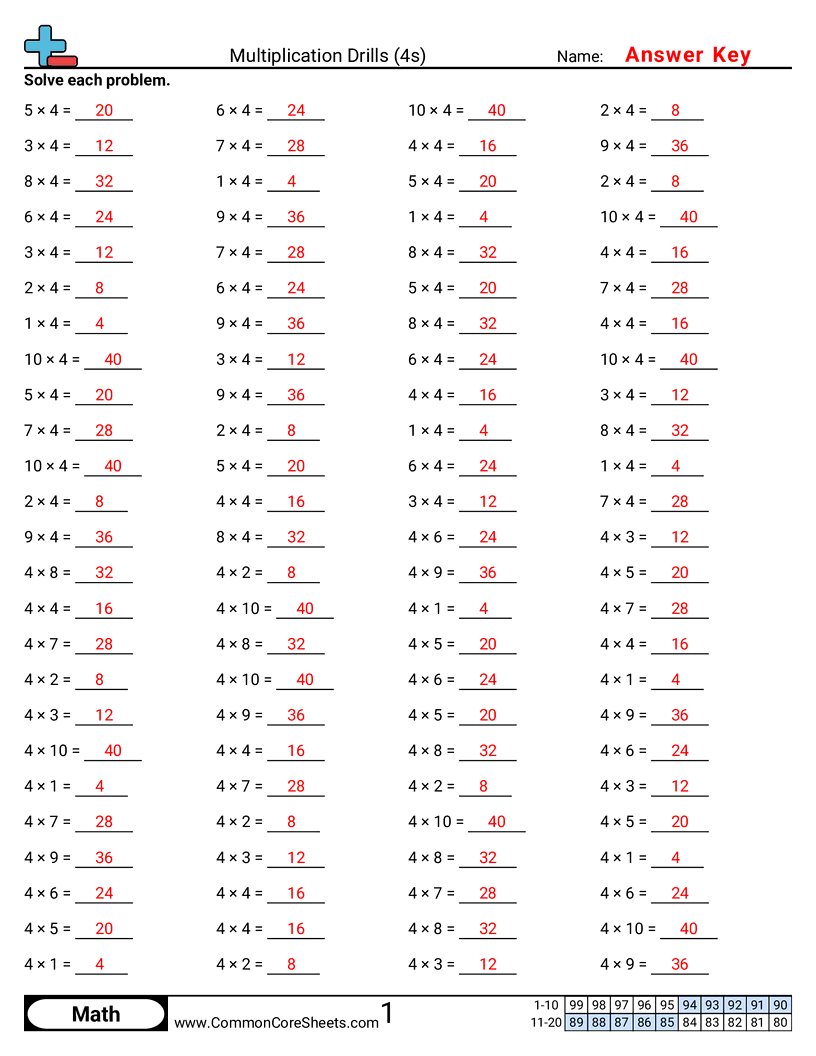
Memorize and recall the 4 times table facts. Multiply 4 by numbers 1 through 10 quickly and accurately. Build speed and confidence with basic multiplication facts.
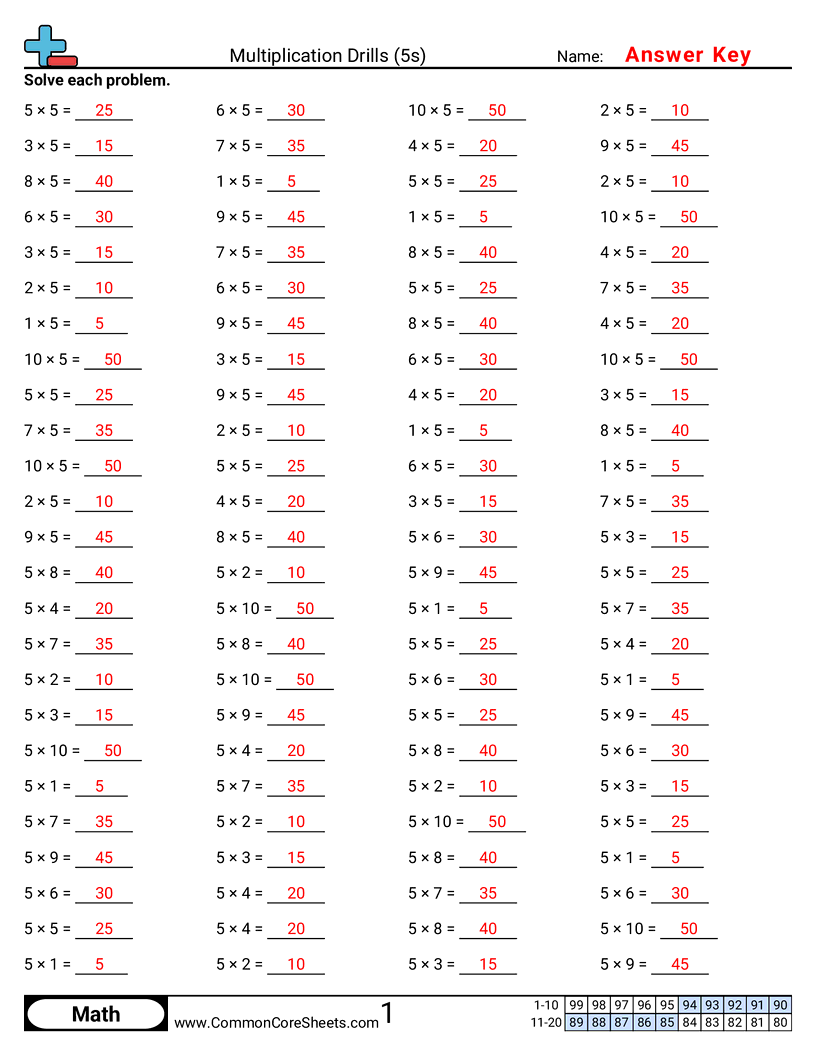
Memorize and recall the 5 times table facts. Multiply 5 by numbers 1 through 10 quickly and accurately. Use patterns in the 5s facts (like counting by 5s and answers ending in 0 or 5) to solve problems faster. Build speed and confidence with basic multiplication facts for mental math.
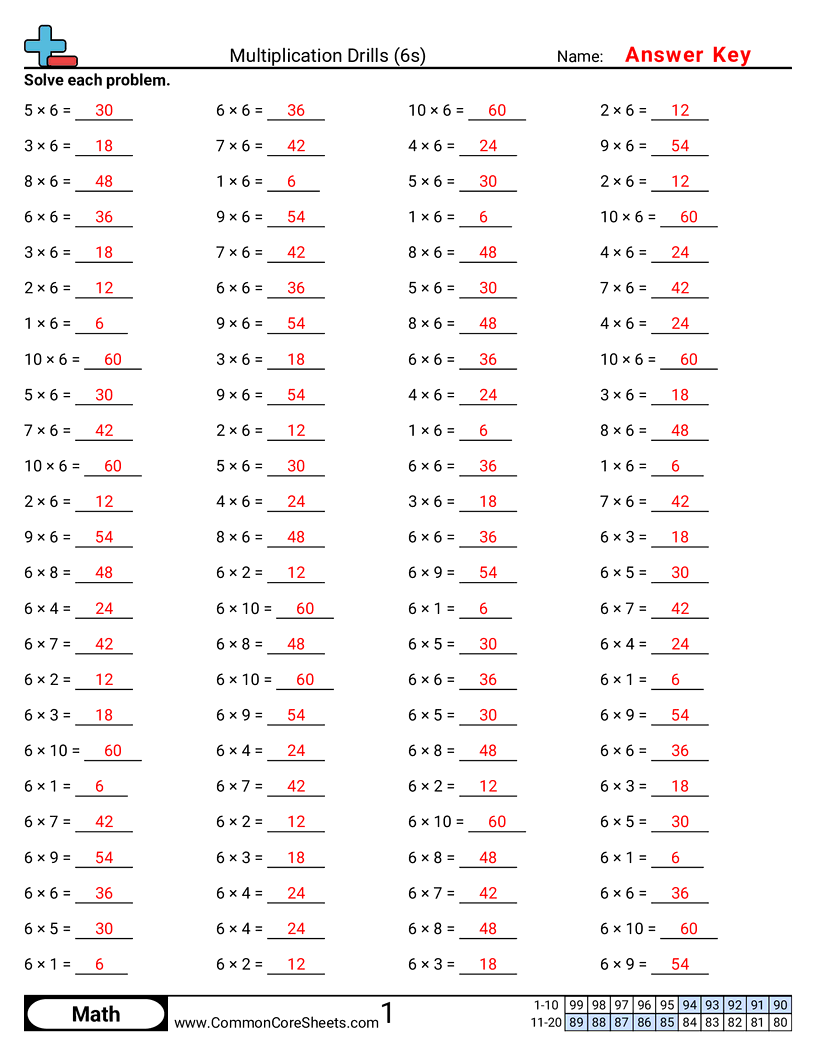
Memorize and recall the 6 times table facts. Multiply 6 by a whole number from 1 to 10 quickly and accurately. Build speed and confidence with basic multiplication facts.
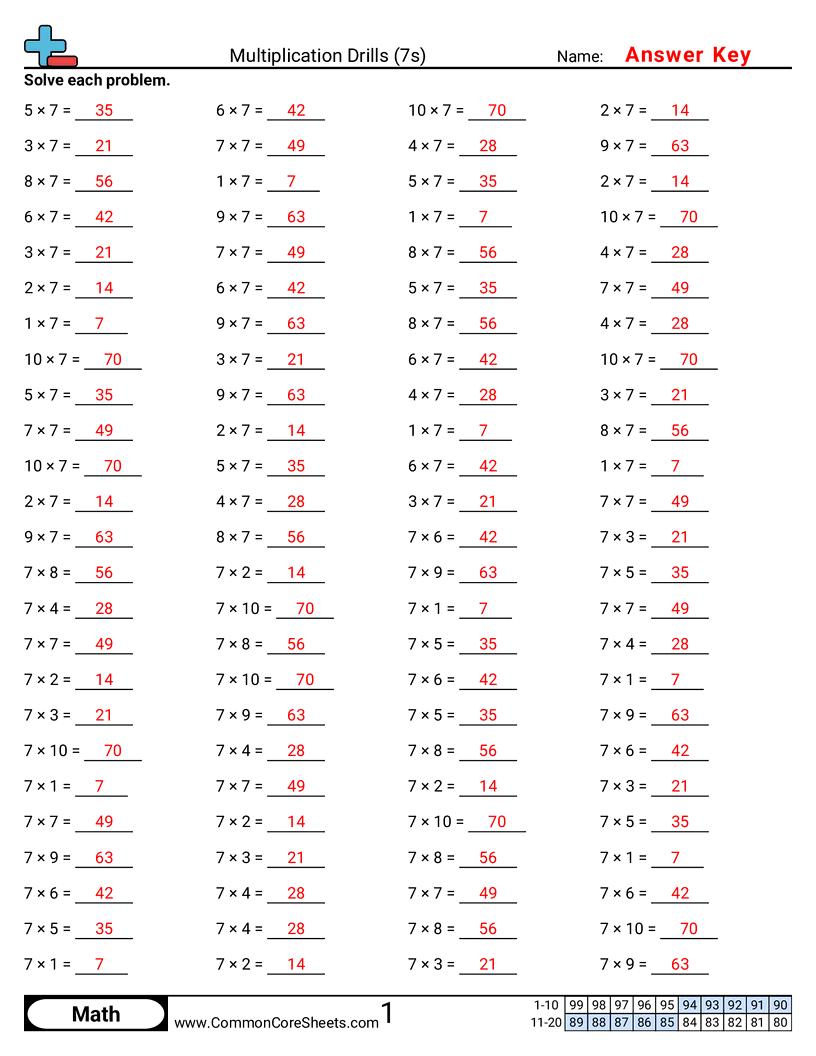
Practice the 7 times table facts from 7×1 to 7×10. Get faster at multiplying by 7 in your head.
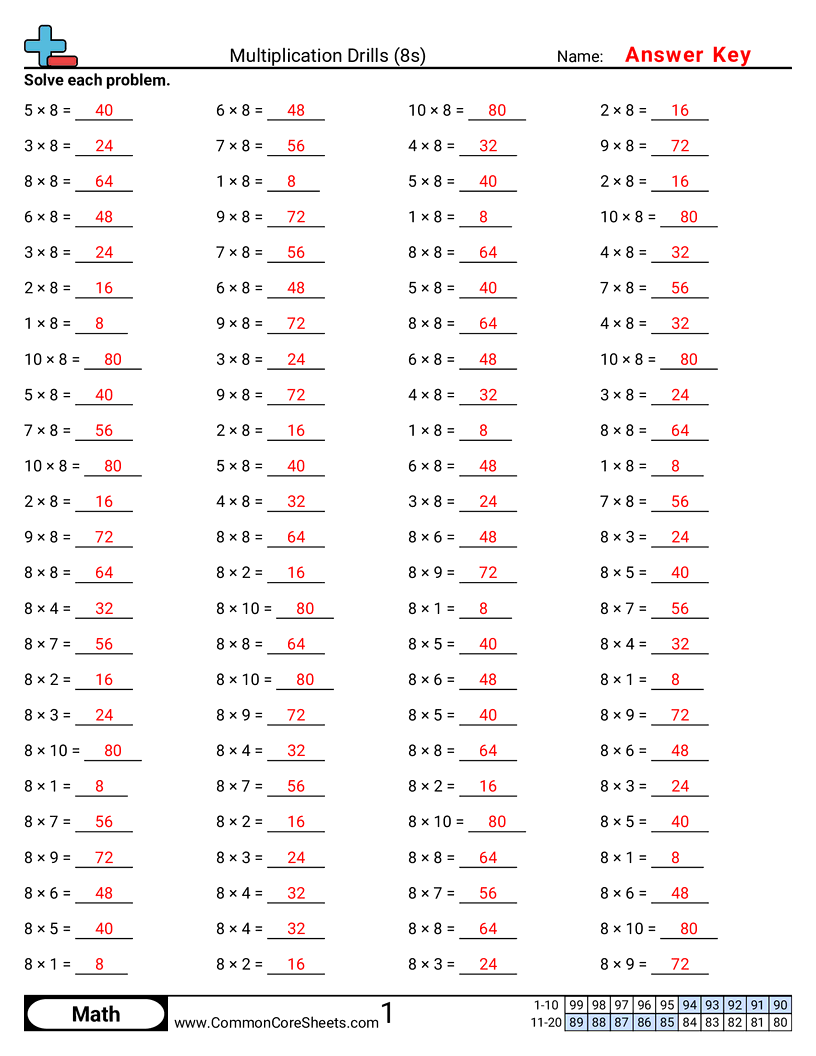
Memorize and recall the 8 times table facts. Multiply 8 by a whole number from 1 to 10 quickly and accurately. Build speed and confidence with mental multiplication using 8s.
Memorize and recall the 9 times table facts. Multiply 9 by numbers 1 through 10 quickly and accurately. Use patterns in the 9s facts to solve problems mentally. Build speed and confidence with basic multiplication facts.
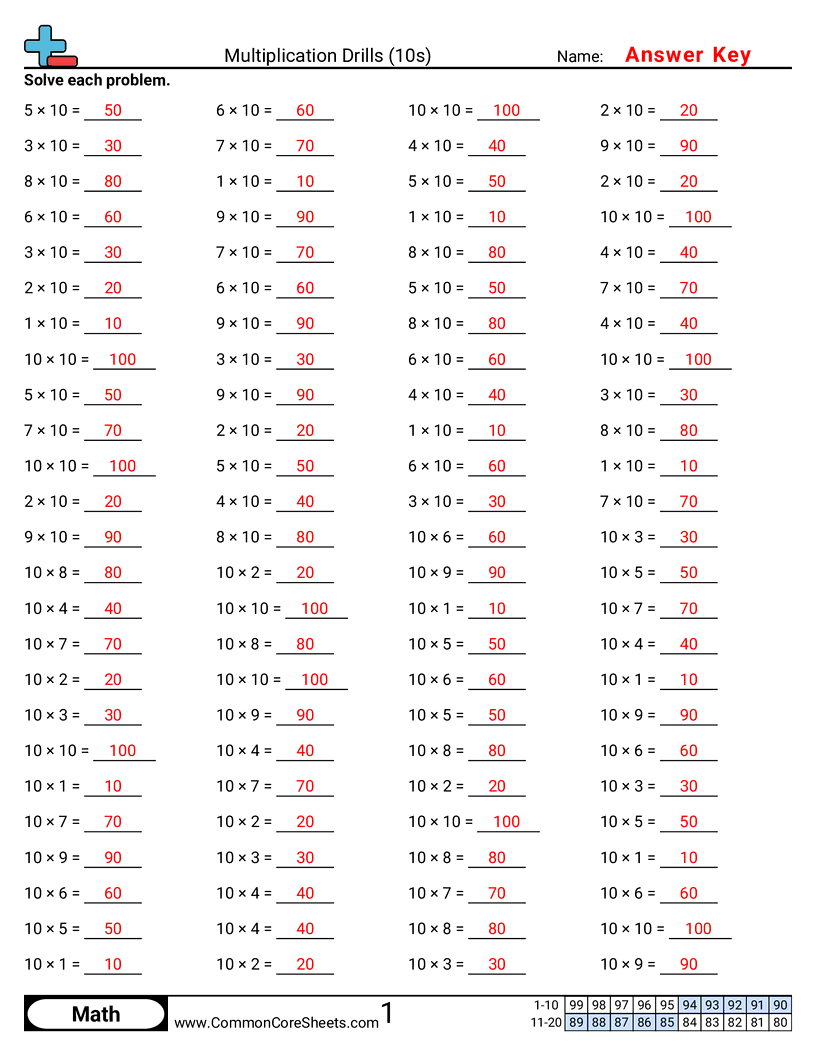
Memorize and recall the 10 times table quickly. Multiply 10 by a whole number from 1 to 10 accurately. Use the pattern that multiplying by 10 makes the number ten times bigger (adds a zero). Build speed and confidence with basic multiplication facts.
Memorize and recall the 11 times table quickly. Multiply 11 by a whole number from 1 to 10 accurately. Use mental math patterns to find 11s facts without counting. Build speed and confidence with basic multiplication facts.
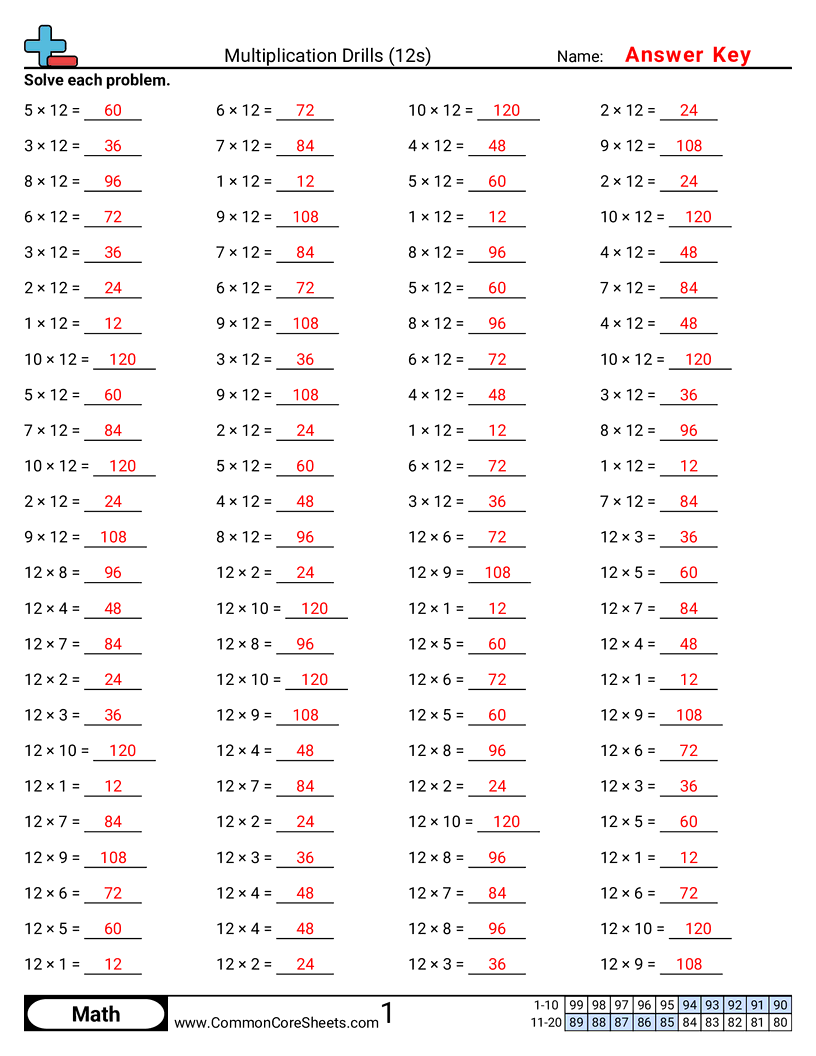
Memorize and recall the 12 times table facts. Multiply 12 by a whole number from 1 to 10 quickly and accurately. Use mental math patterns to find 12s facts (like 10× plus 2×). Build speed and confidence with multiplication facts for better overall fluency.
Practice quick recall of multiplication facts from 1×1 through 10×10. Multiply single-digit numbers accurately to find the product. Get faster at solving mixed multiplication facts without relying on a pattern or order. Build confidence doing multiplication in your head.
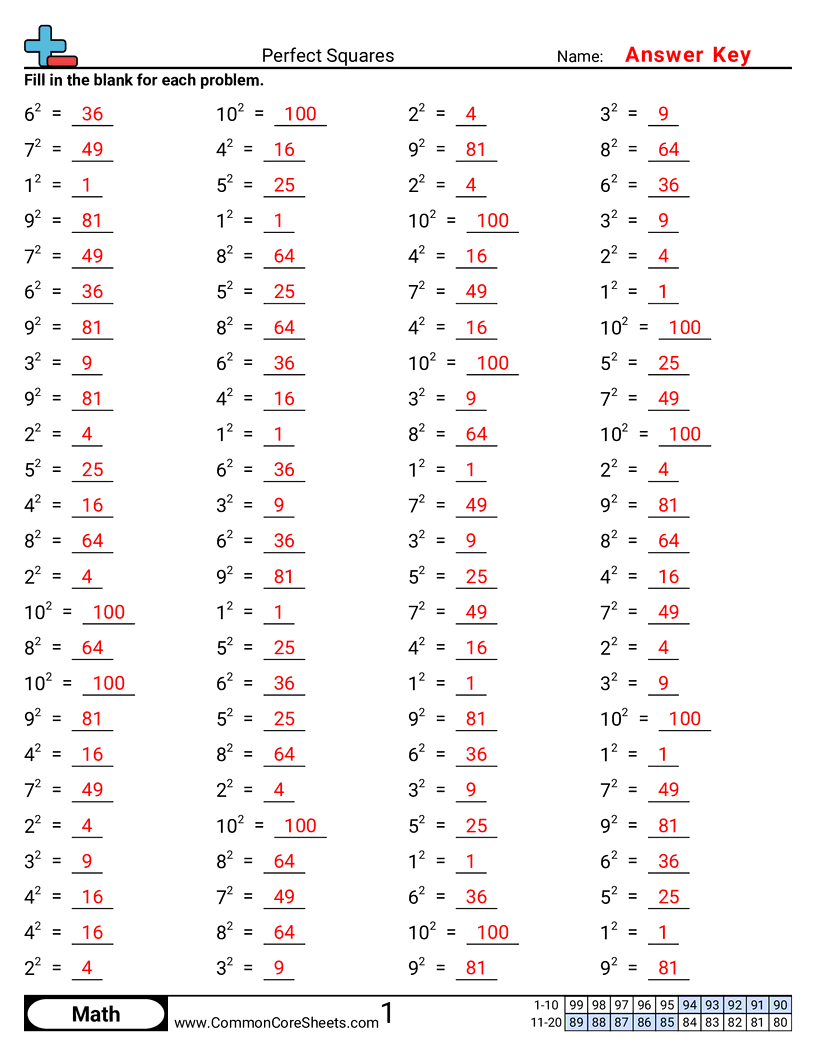
Recognize which numbers are perfect squares (like 1, 4, 9, 16, 25, and 36). Find the square of a whole number (multiply a number by itself).
About these worksheets
Division drill worksheets build speed and accuracy with basic division facts. Each worksheet contains 100 problems focused on a specific divisor — from 2s through 10s — plus mixed fact sets combining all division facts. These are designed for timed practice, daily warm-ups, or tracking fact fluency progress.
Practice dividing numbers by 2 to find half of a group. Get faster and more confident with basic division facts for 2.
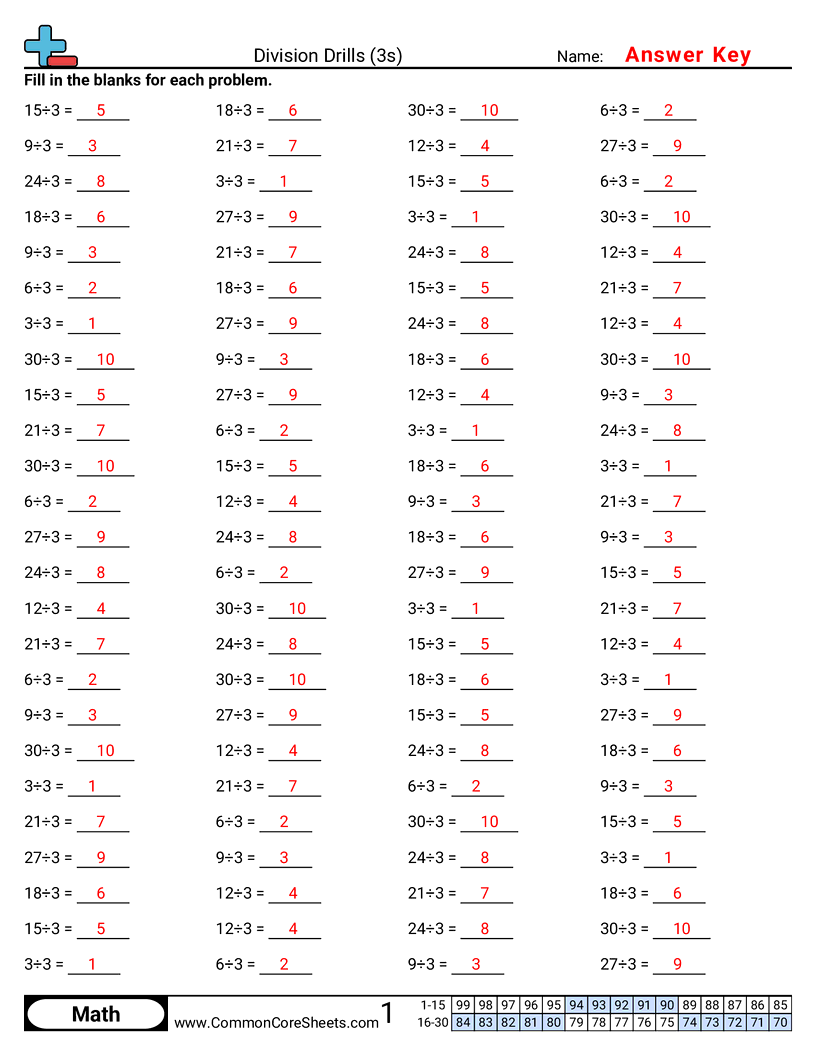
Get faster at recalling the division facts for 3 without counting.
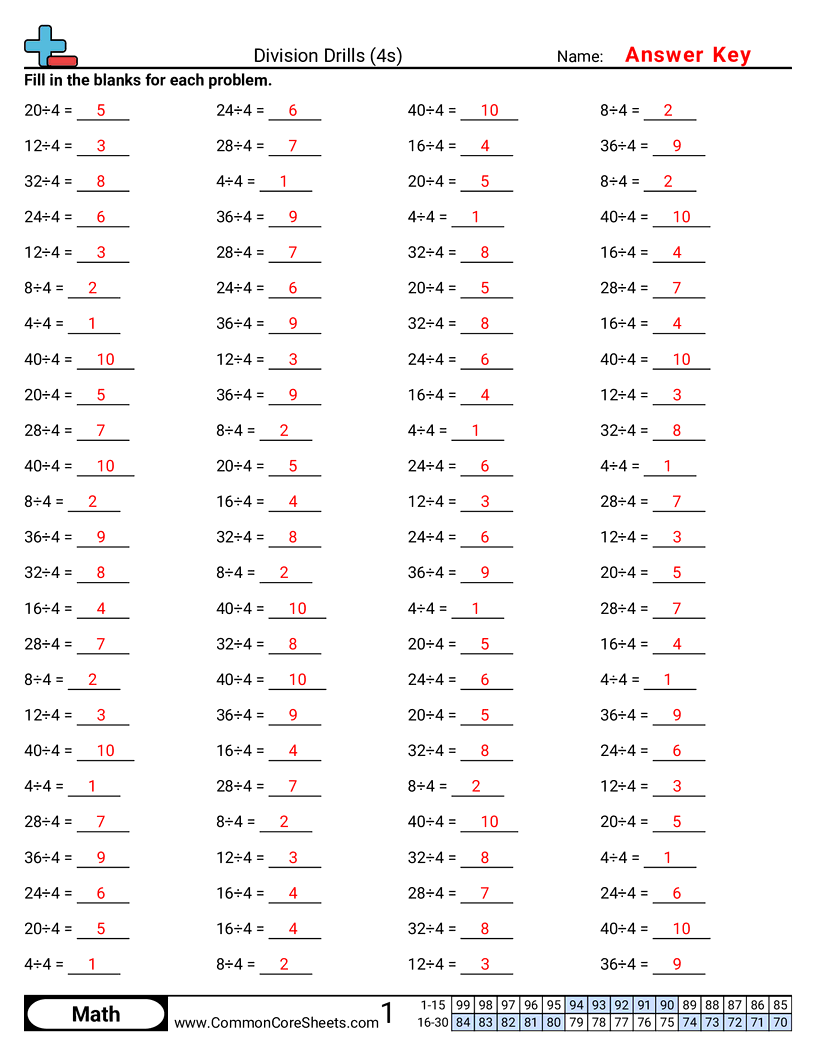
Get faster at 4s division facts and quotients.
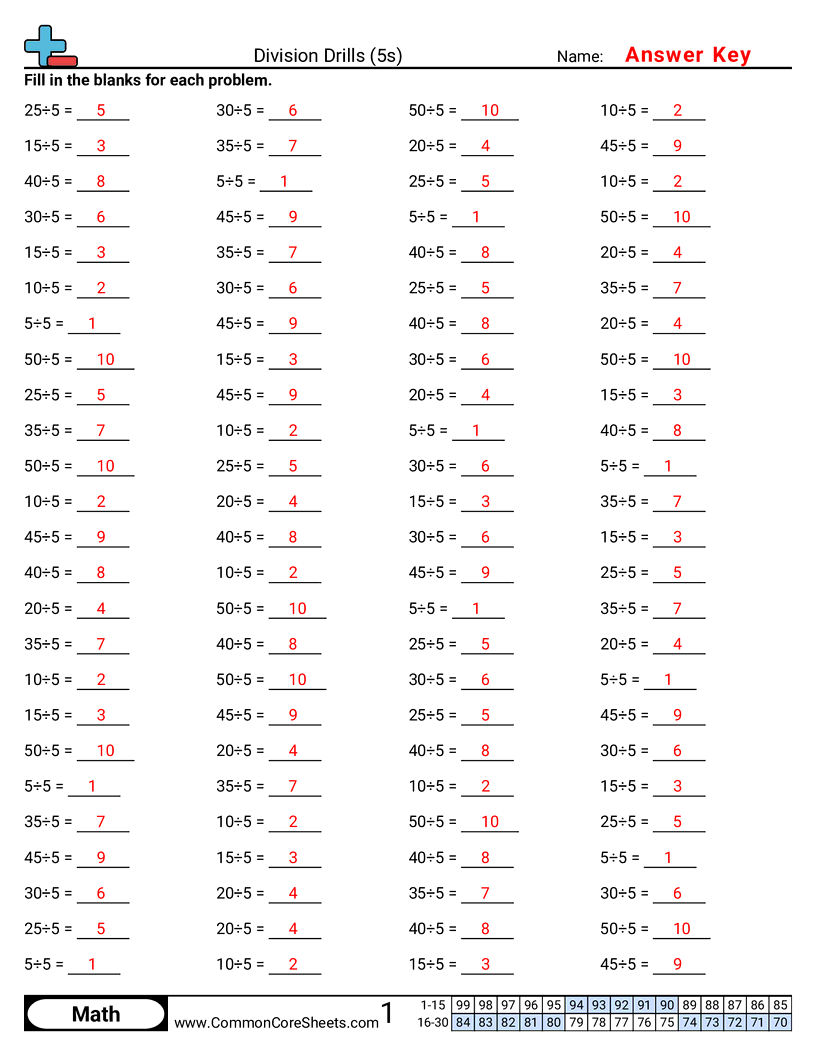
Get faster and more accurate with 5s division facts from memory.
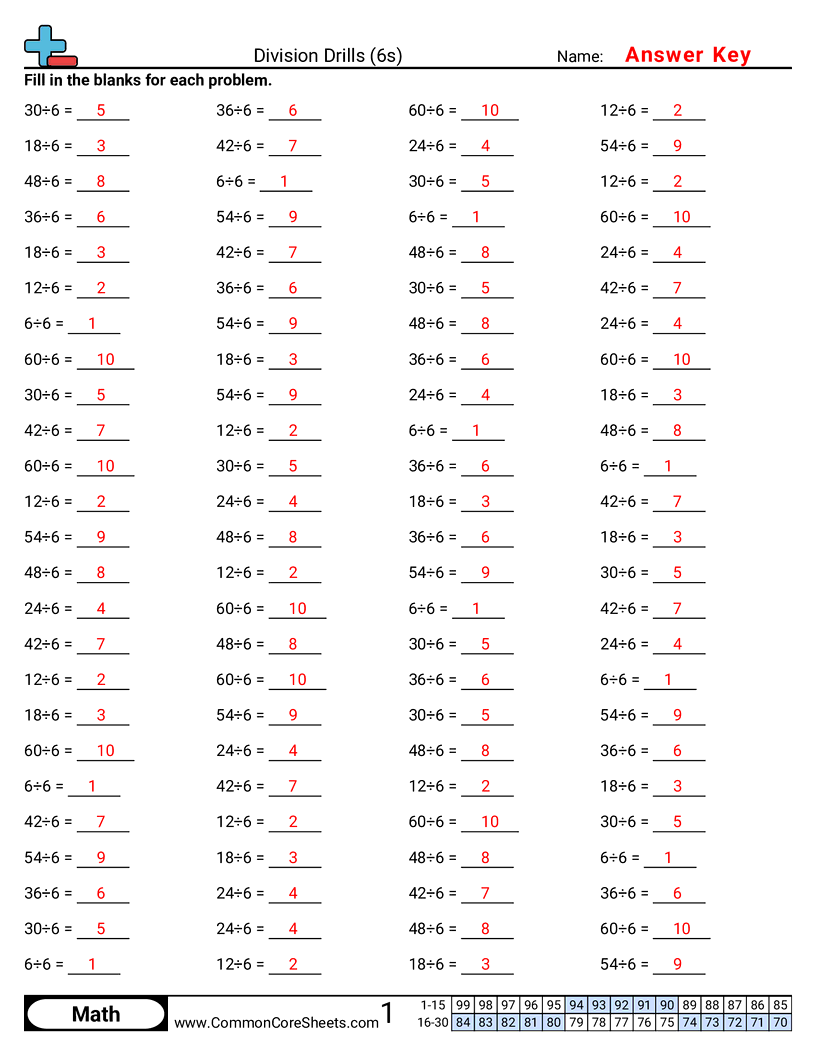
Get faster and more accurate with the 6s division facts from memory.
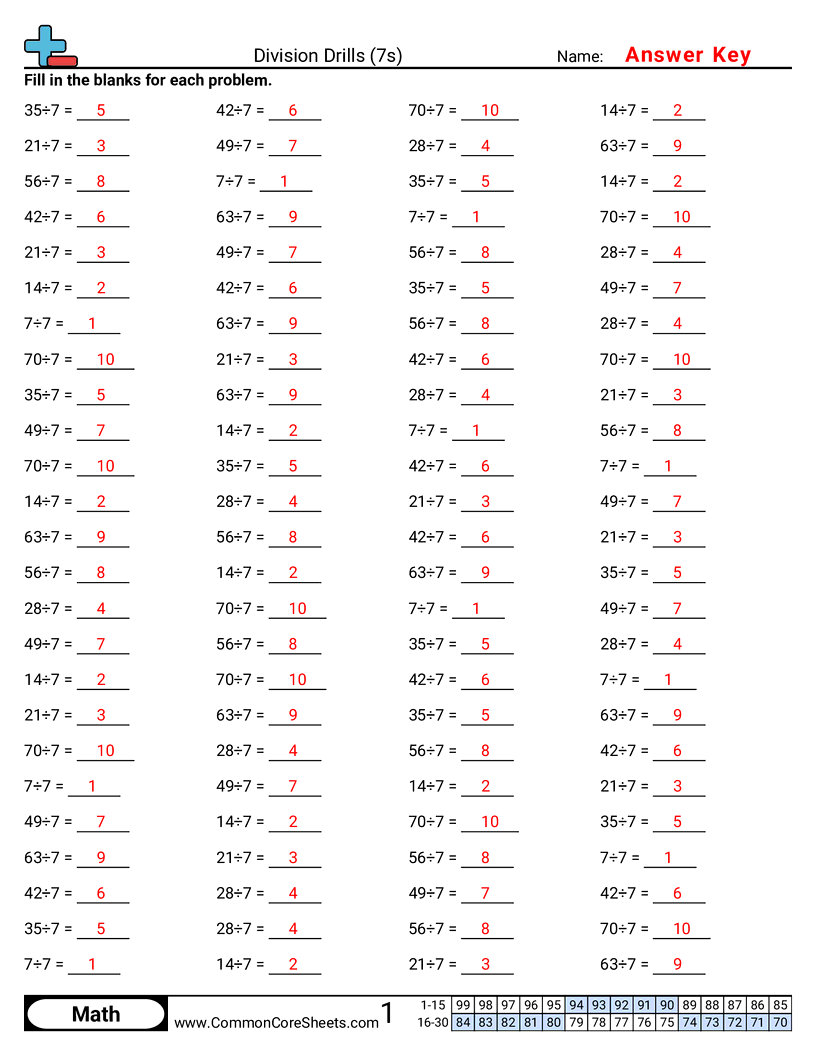
Get faster at recalling division facts for 7 without using a calculator.
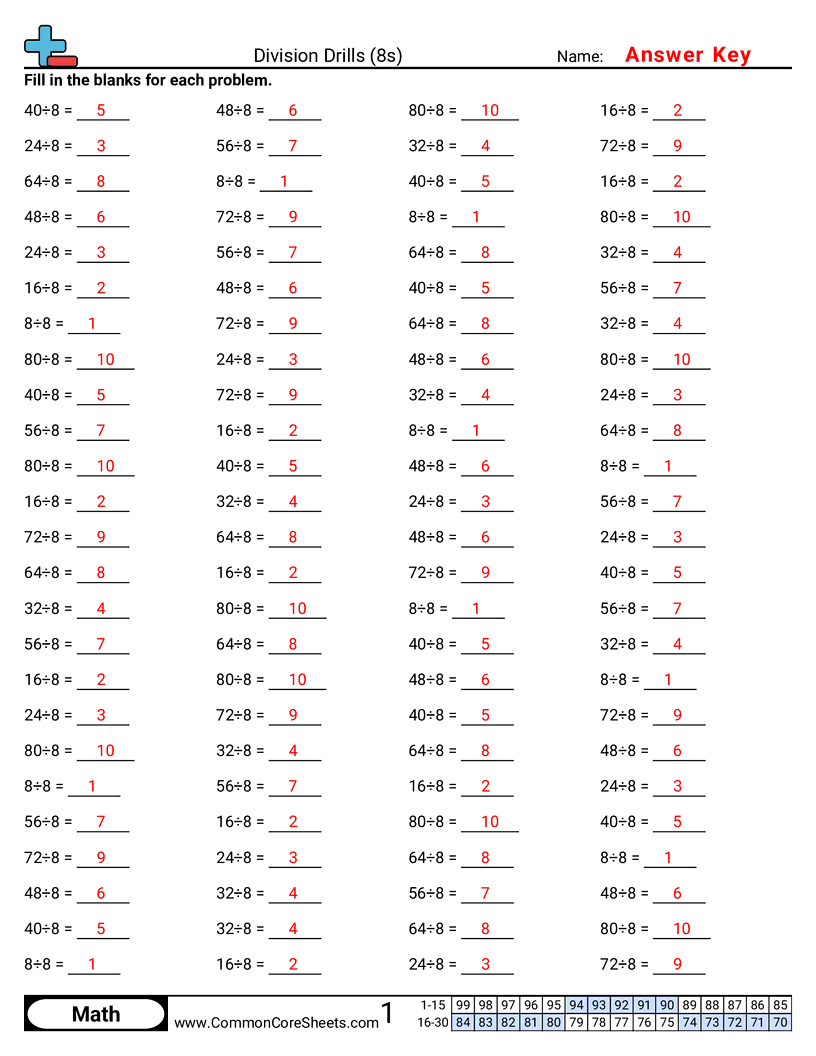
Get faster at recalling the division facts for 8 without counting.
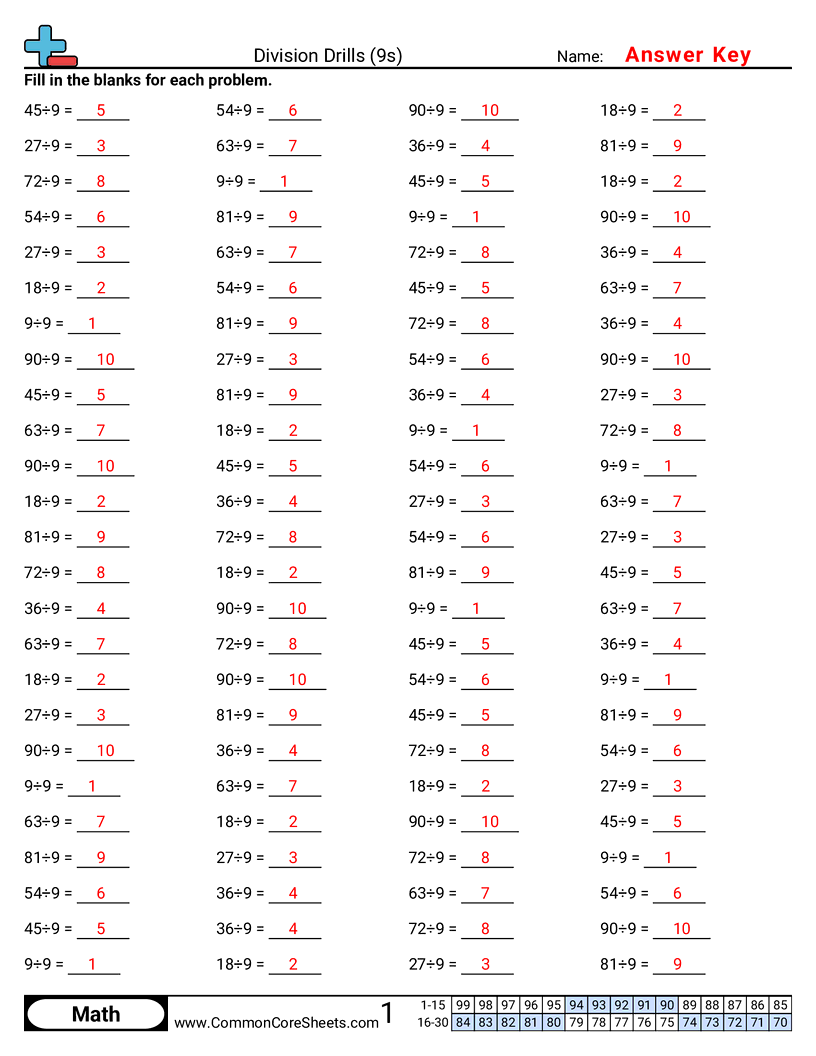
Get faster and more accurate with 9 division facts from memory.
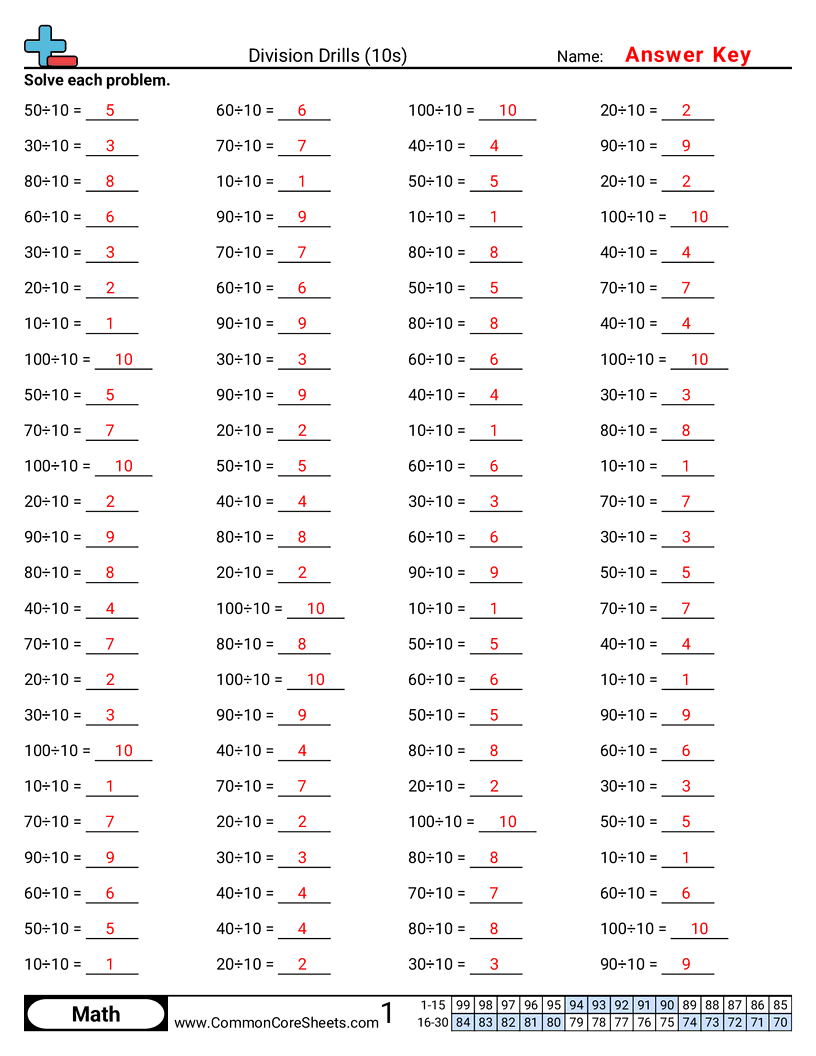
Practice dividing numbers by 10 quickly and accurately. Learn how dividing by 10 makes the number 10 times smaller.
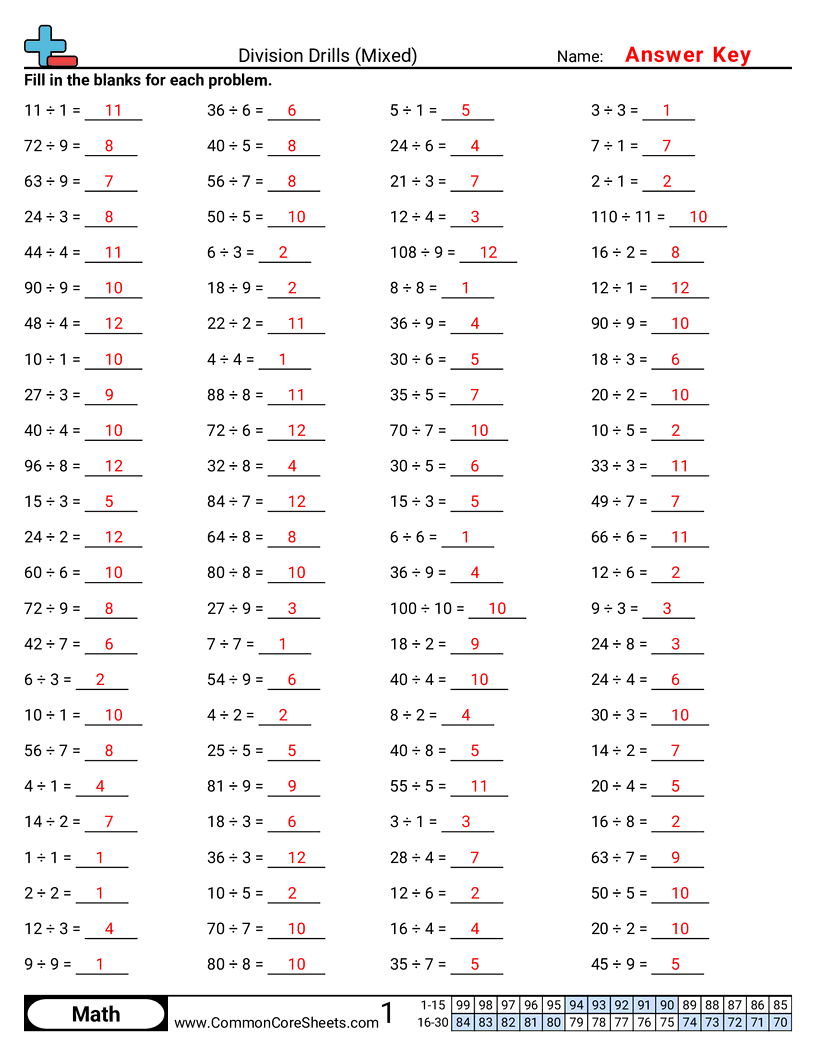
Practice dividing numbers from 1 to 10 and saying the quotient quickly. Build accuracy with basic division facts so harder division problems feel easier later. Recognize that division is the opposite of multiplication for the same fact family.
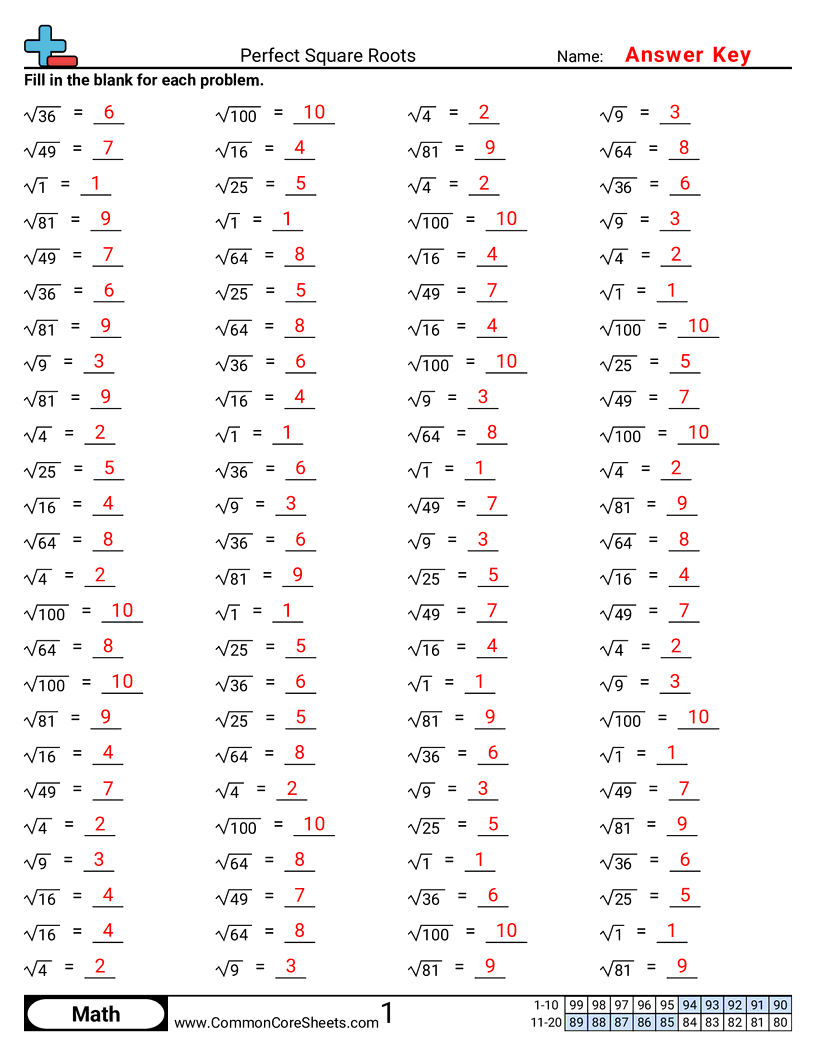
Recognize which numbers are perfect squares (like 36 or 81). Find the whole-number square root of a perfect square. Connect squares and square roots (for example, knowing 12×12 matches √144). Build speed and accuracy with common square root facts.
About these worksheets
Time drill worksheets help students practice adding and subtracting hours and minutes on a 12-hour clock. Problem sets cover adding hours, adding in 15-minute increments, subtracting hours, and subtracting in 15-minute increments. Each worksheet contains 50 problems for building speed with time calculations.
Add a number of hours to a starting time on a 12-hour clock. Count forward by hours and keep the time label correct (AM or PM). Handle sums that pass 12 o’clock and wrap around to the next hour correctly. Read and write times using hour-only clock notation (like 7:00).
Add minutes in 15-minute steps to find a new time. Count forward by quarters of an hour (15, 30, 45, 60) without losing track. Handle totals that pass 60 minutes and understand that 60 minutes makes 1 hour. Read and work with times shown in minutes, including a.m. and p.m.
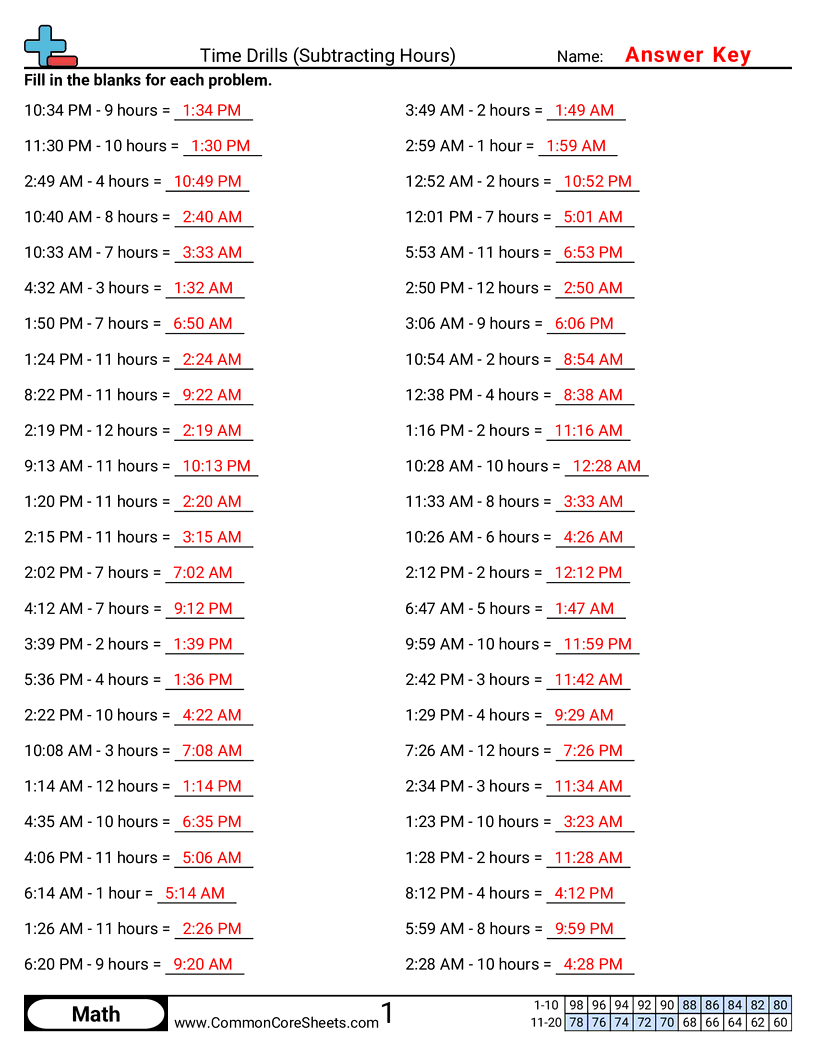
Subtract one time from another when the times are shown in hours on a 12-hour clock. Count backward by hours to find what time it was a certain number of hours ago. Handle hour subtraction that crosses from AM to PM or from PM to AM. Use the idea that after 12 comes 1 again to keep the hour correct on a 12-hour clock.
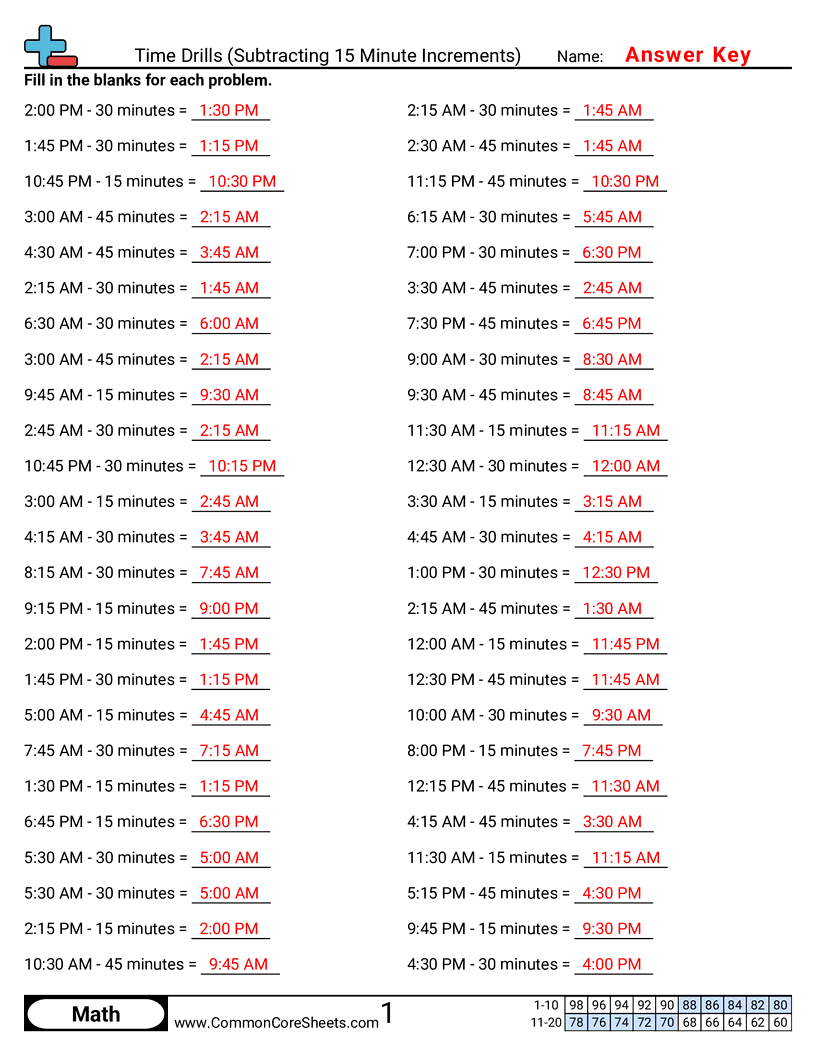
Subtract minutes when the numbers go up and down by 15 minutes at a time. Count back by quarters of an hour to find how much time is left. Work quickly and accurately with minute subtraction facts based on 15, 30, and 45. Use skip-counting by 15s to double-check minute subtraction.
About these worksheets
Mixed drill worksheets combine multiple operations in a single practice set. Students solve 100 problems covering addition, subtraction, multiplication, and division facts, building fluency in choosing the right operation and computing quickly. Additional practice includes finding ten more and ten less within 100.
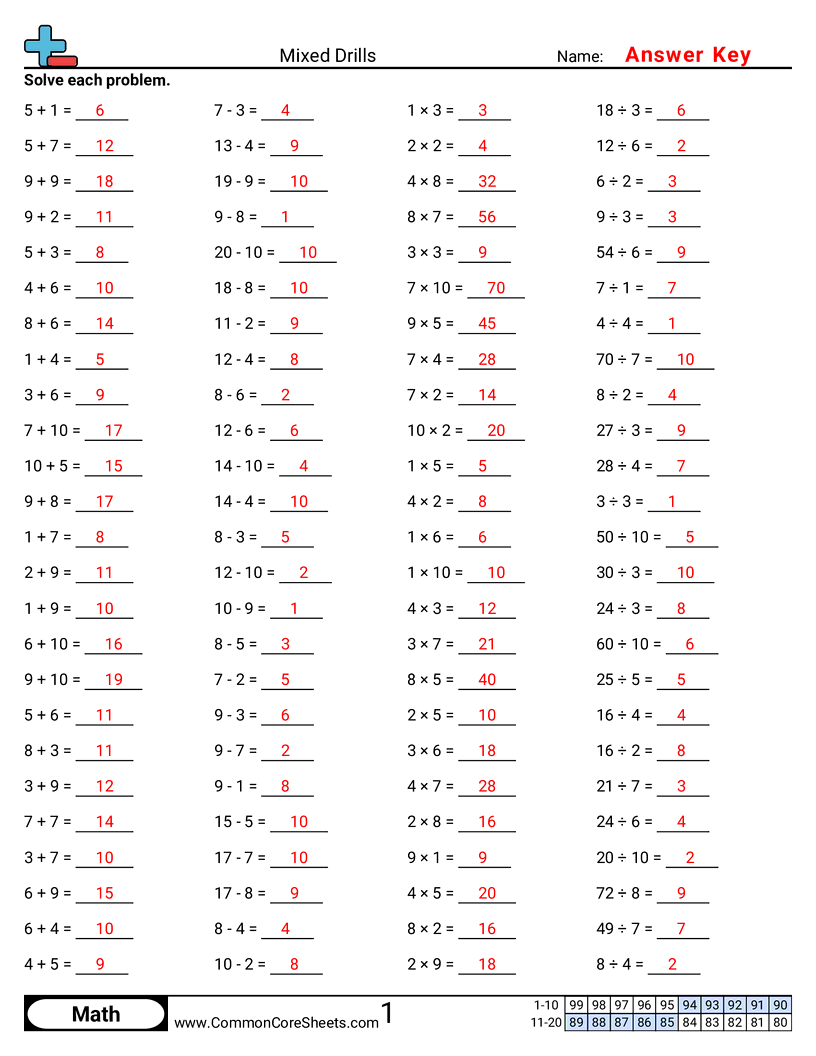
Practice quickly solving basic addition facts. Get faster at choosing the right operation when problems are mixed. Build accuracy when doing mental math without a calculator. Improve fluency by working through random fact problems without a pattern.
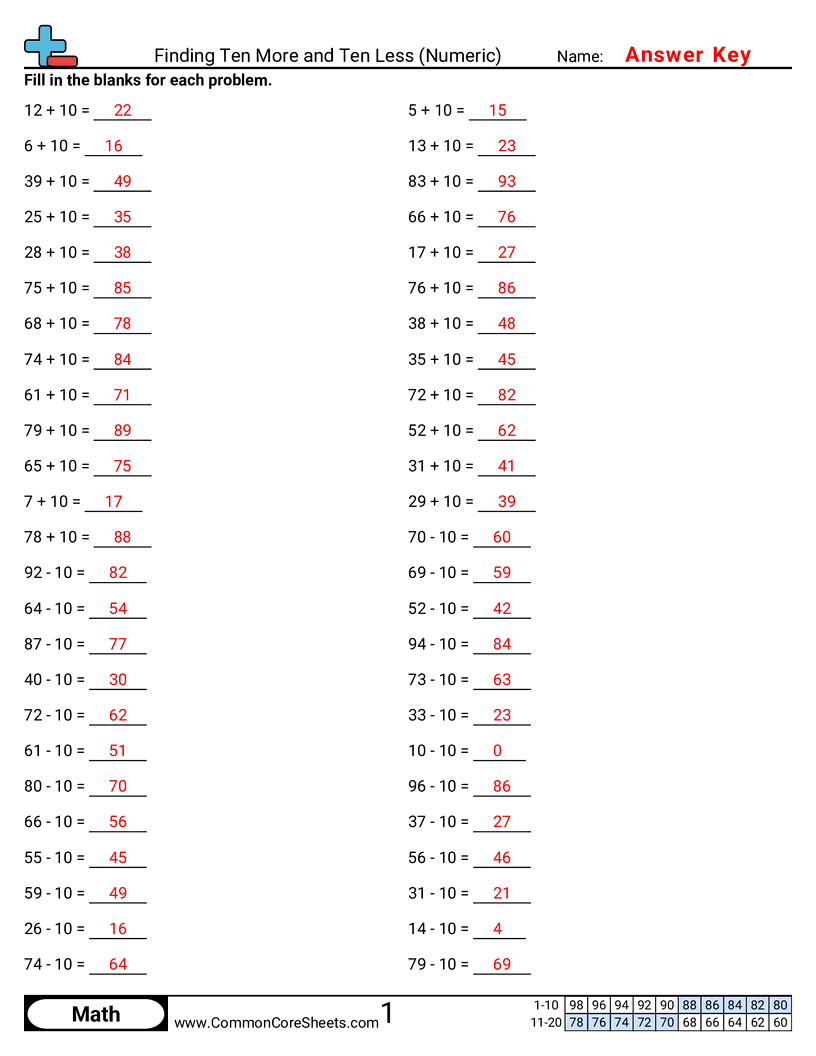
Find the number that is 10 more than a given number. Find the number that is 10 less than a given number. Use place value to see how adding or subtracting 10 changes the tens digit while the ones digit stays the same. Work quickly and accurately with numbers up to 100 by spotting the +10 and -10 pattern.
Playwire Advertisement