Statistics Worksheets
Free statistics worksheets with answer key. No login or account needed. From answering statistical questions to analyzing data, we've got you covered. A grading column and quick grade scale maker grading a breeze and a modified pages help with lower level learners or when just introducing a topic. Great for teachers or for homeschool.
Browse Sheets By Problem Type
×
About these worksheets
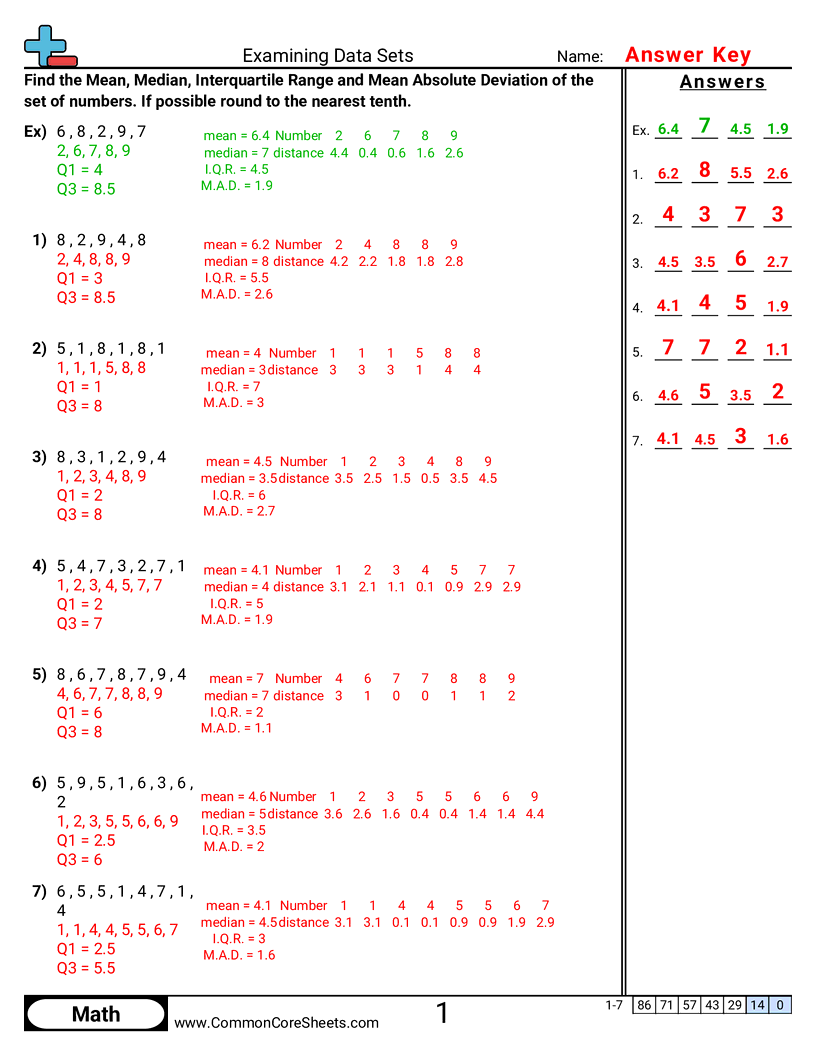
These worksheets provide practice with advanced numerical data analysis. Students find the mean, median, interquartile range, and mean absolute deviation of data sets, building the statistical reasoning skills needed for sixth grade and beyond.
6sp5c

- Find the mean (average) of a set of numbers.
- Find the median by putting the numbers in order and locating the middle value.
- Find the interquartile range (IQR) to describe how spread out the middle half of the data is.
- Find the mean absolute deviation (MAD) to describe how far values typically are from the mean.
8ee5

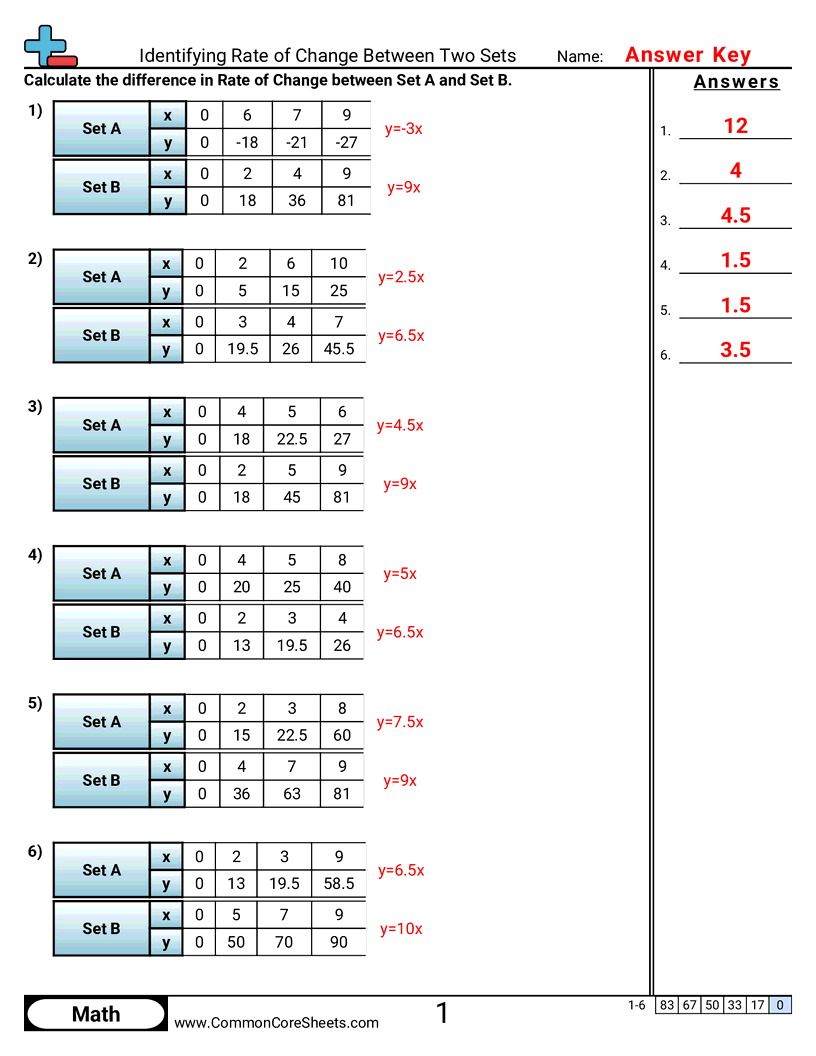
- Practice finding the rate of change (slope) for two different proportional relationships given as tables
- Calculate the difference between the two rates of change
- Work with rates that include decimals and negative numbers
Statistic Word Problems
Link
About these worksheets
Students explore the foundations of statistical thinking. Worksheets cover identifying statistical questions that require data collection, distinguishing between populations and samples, and examining whether samples are representative and unbiased. Aligned with sixth and seventh grade statistics and probability standards.
6sp1

- Decide whether a question needs data from a group of people or things to answer it.
- Tell the difference between questions with one fixed answer and questions that can have many different answers.
- Look for clues that a question expects variation, like asking about a population, a sample, or a range of results.
- Explain why a question is or is not statistical using simple reasoning.
7sp1

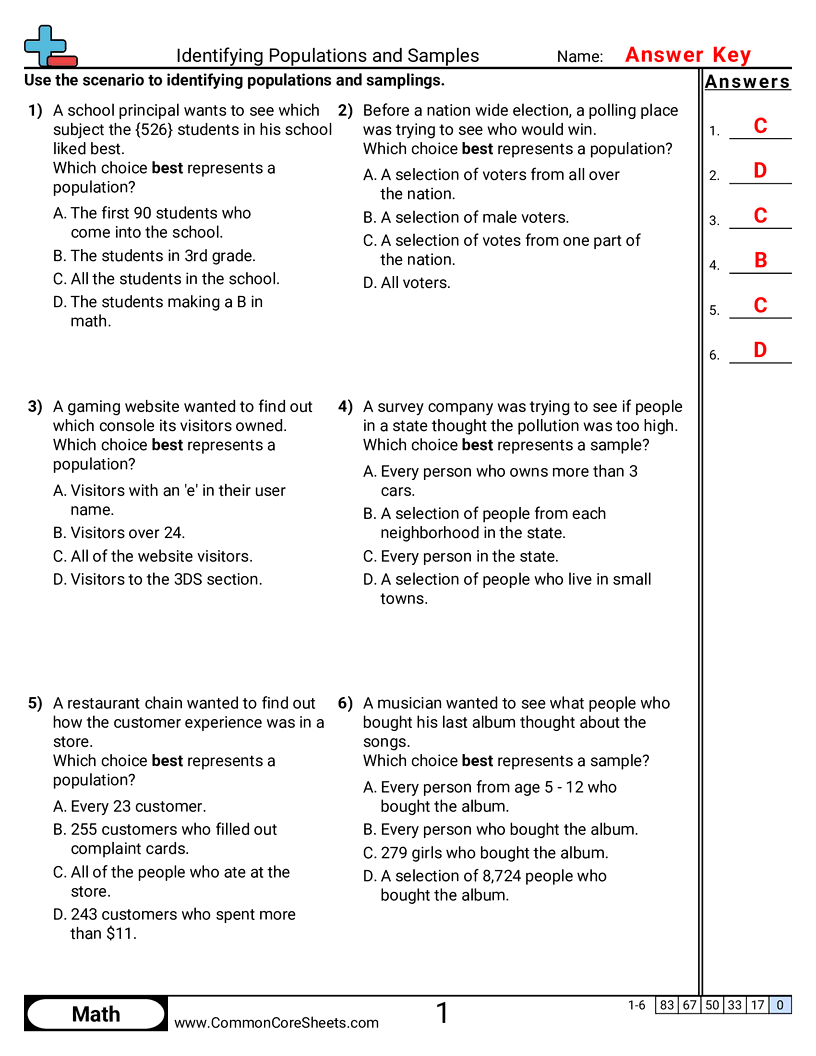
- Tell the difference between a population (the whole group) and a sample (part of the group).
- Spot when a sample is only a small part of the population and may not represent everyone.
- Use the words population and sample correctly when talking about data.
7sp1

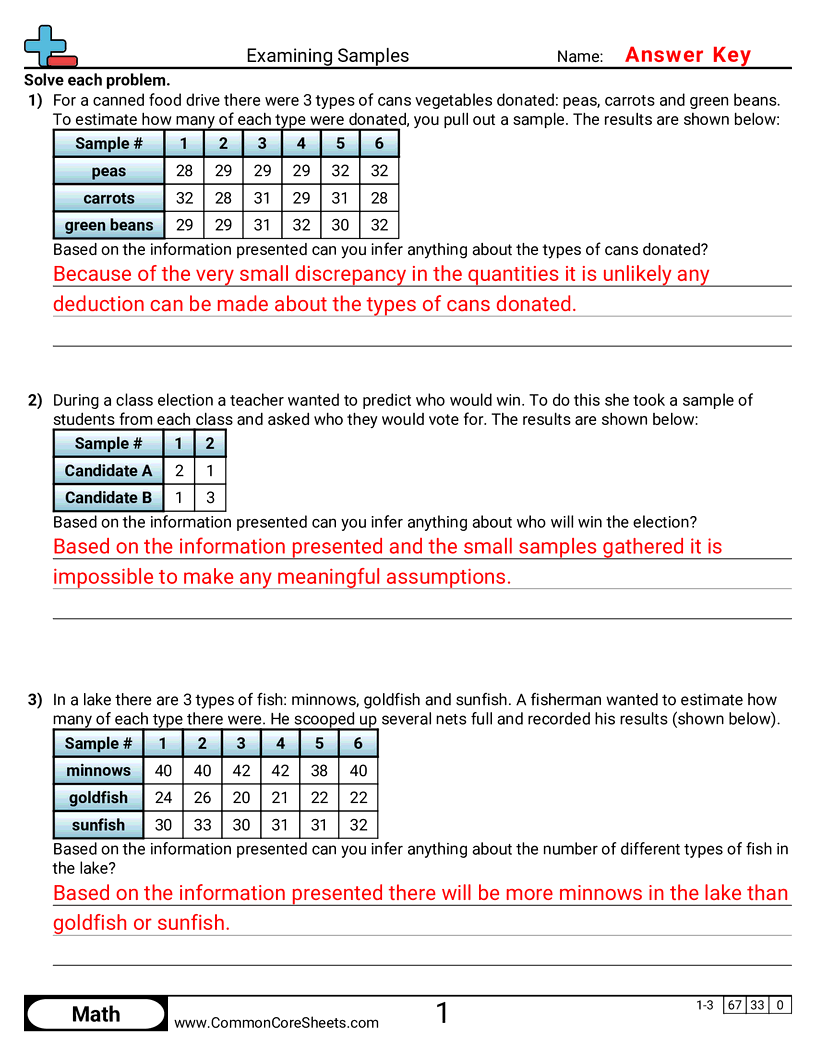
- Decide whether a sample is likely to represent a whole population fairly.
- Spot sources of bias in how data is collected, like who was asked or how people were chosen.
- Explain why random sampling usually gives more reliable information than picking people conveniently.
- Use information from a sample to make a reasonable guess about what might be true for the full population.